
NOVEMBER 5, 2026
On Homecoming, the Faces That Shaped Us, and the Dignity of Decline
by Dr Wilhelm Lichtenberg
"Let us cherish and love old age; for it is full of pleasure if one knows how to use it." - Seneca, Letters to Lucilius, XII
The road home
There seemed to be a particular quality to the morning, the light on the road as I drove into the town where I was born. At this time of year, the early summer sun is warm and gentle at that time of day, comforting and pleasant as opposed to the brutal heat it can bring about later in the day. There is a faint glow of comfort and the gentleness of pleasant memories. The streets announce themselves before they come into view. A corner, a school wall, the angle of a church spire against a wide Free State sky. Each is recognised a fraction before it is seen, as though the body had kept a map the mind had long since filed away.
I have written before about trespassing on my own past: the strange sensation of walking through rooms that no longer belong to me, yet in which I am somehow still expected. This week I trespassed again, and found the door unlocked. I stayed with dear friends who are, in every way that matters, family. Their home held me the way only old homes can - without ceremony, without needing to be told who I was.
The word nostalgia has a curious medical history. It was coined in 1688 by a young Swiss physician, Johannes Hofer, who joined the Greek nostos (return home) to algos (pain) to name an affliction he observed in soldiers serving far from their mountains. They wasted, grew listless, and some, he believed, died of it. For nearly two centuries nostalgia was a diagnosis, something to be treated and, if possible, cured.
I have come to think the physicians had it half right. There is pain in the return. But it is the pain of a muscle long unused being stretched, not the pain of injury. Nostalgia, correctly held, is not a longing to go back. It is the recognition that one came from somewhere - that one was formed, patiently and at cost, by people and places who asked for nothing in return. It is gratitude wearing the clothes of memory.
The faces in the hall
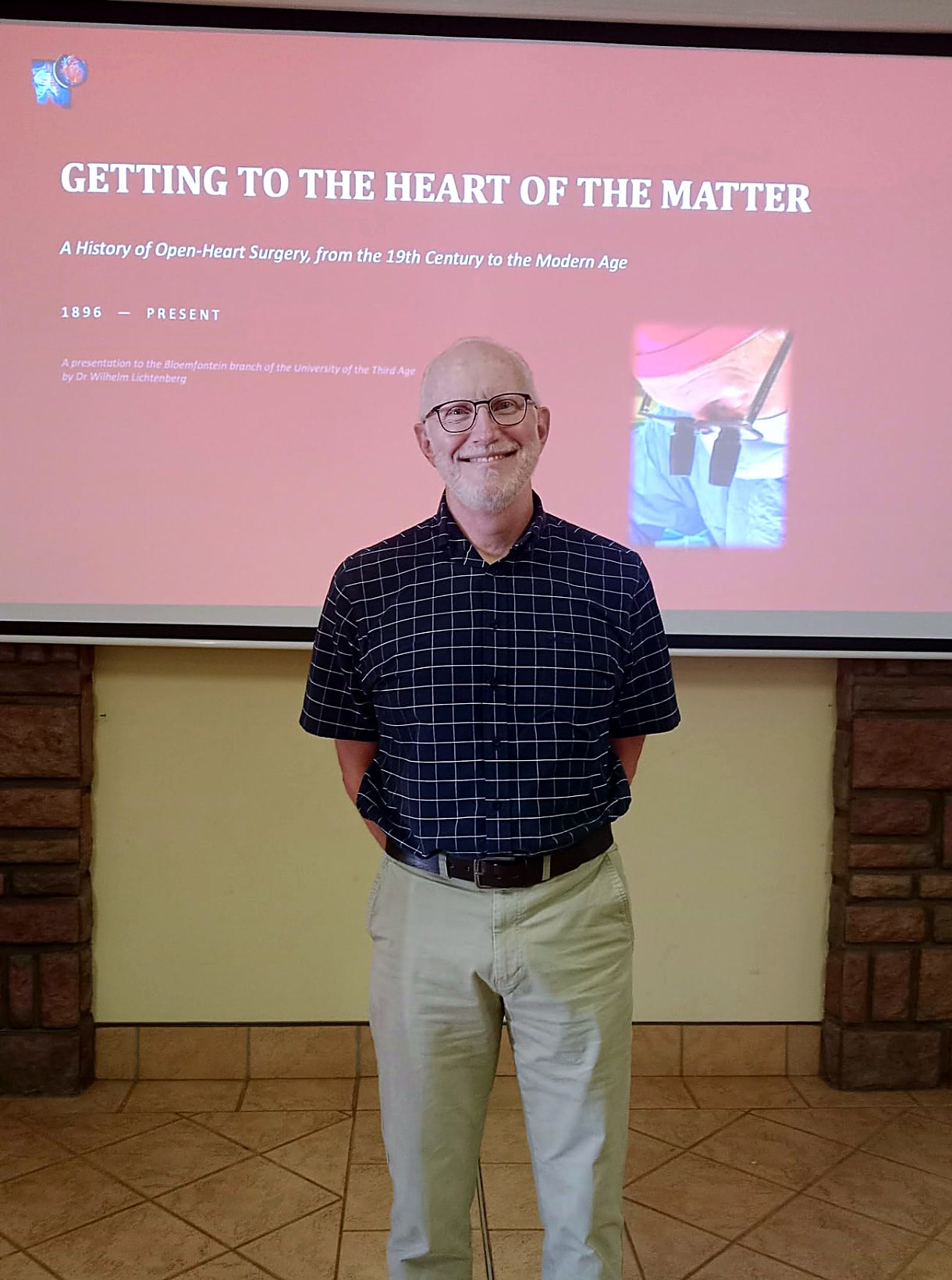
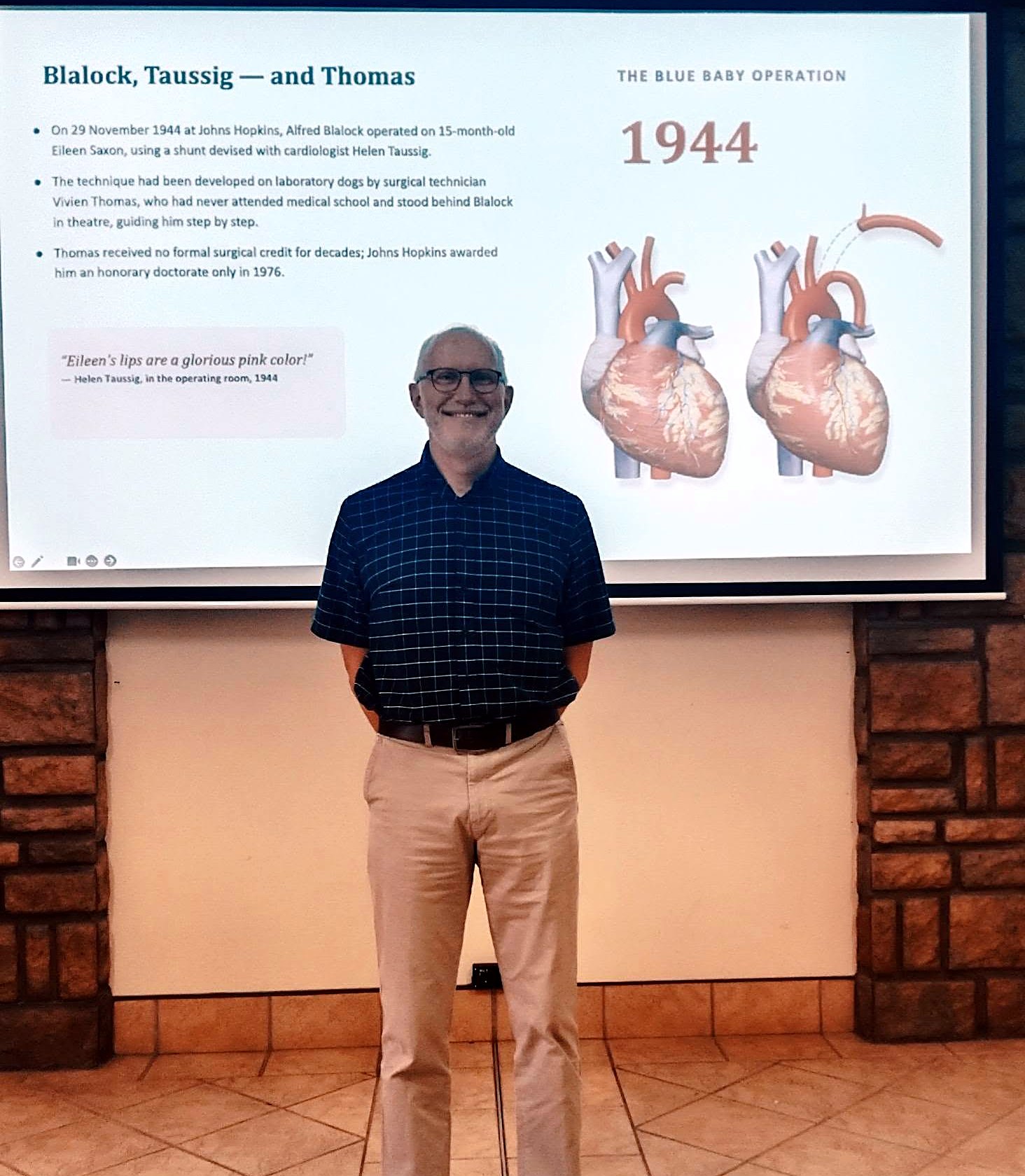
I had been invited to speak on the history of open heart surgery to a fairly large gathering of elderly people. I have had the opportunity to tell this fascinating story many times, of audacious pioneers, of hearts stilled and restarted, of a city at the southern tip of Africa that once held the world's attention. But I have never told it to an audience quite like this one.
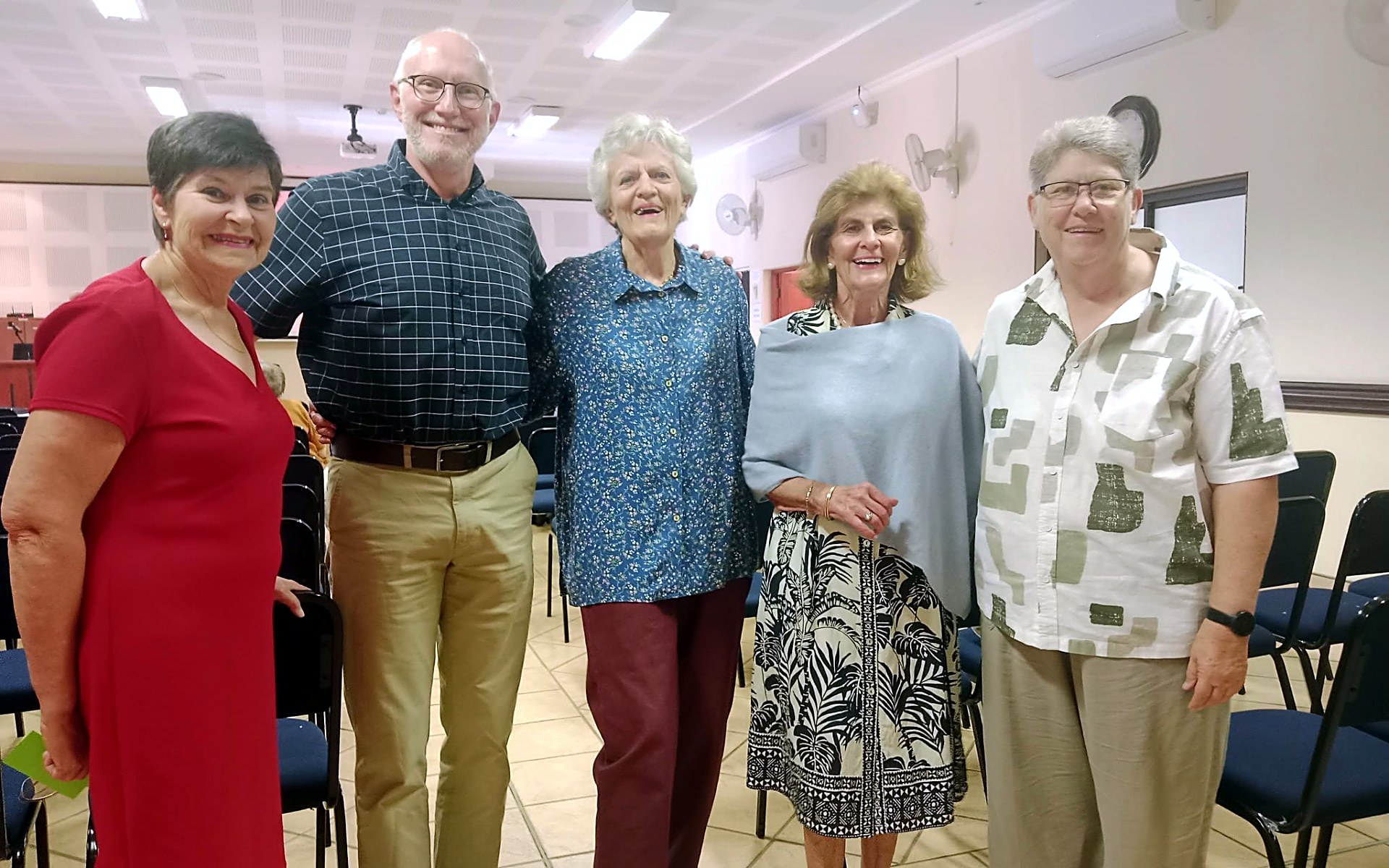
The invitation came from one of my high school teachers. She is but one of a number of mentors who shaped me in my formative years, and with whom, by some grace, I have never lost touch. Many of those mentors have passed on and those who remain are few enough now that each meeting carries a weight it did not once carry.
In the hall were friends and acquaintances of my late parents. One by one they came to me and each carried a fragment of my mother and father that I did not possess: a remark at a dinner, a kindness at a difficult time, a way of laughing. It is a peculiar gift, to be handed pieces of one's own parents by others. One realises that the dead live on not in a single memory, but in a scattered constellation, held in trust by those who knew them, and that each conversation adds a star one had not seen.
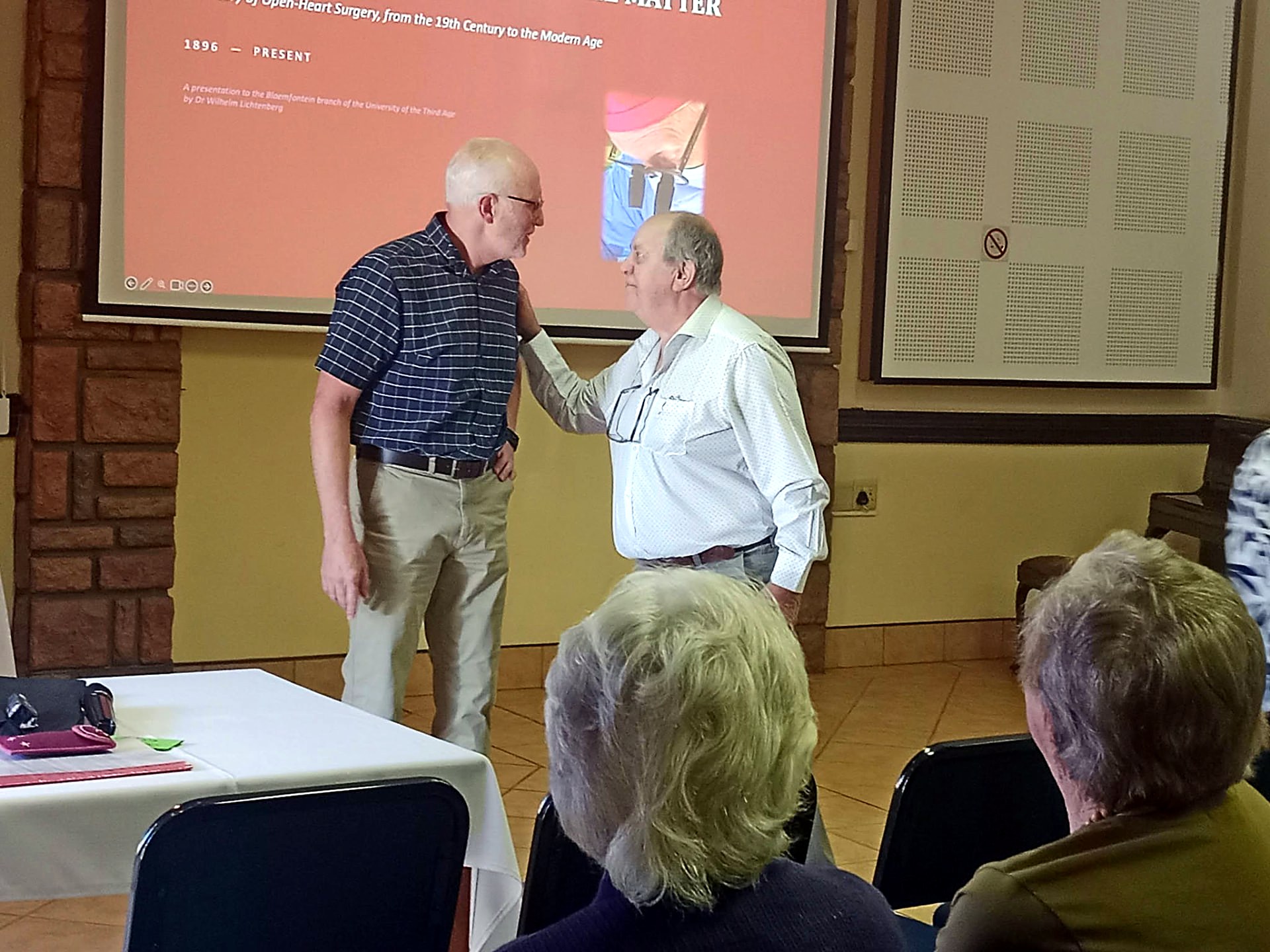
And there, too, were two of my university professors. I had not seen them in more than thirty years, yet the old deference rose in me at once, unbidden, the way a student still half-stands when a teacher enters the room. They stood, in spirit, for all their colleagues. The men and women who took a raw young graduate and made of him a doctor - and who, without ever quite intending to, lit in him the flame of a lifelong love affair with cardiothoracic surgery.
I was speaking about the history of my discipline. It struck me that part of that history was sitting in the audience.
There is a privilege in this that I do not think we name often enough. Most of us lose the people who formed us before we are old enough to understand what they gave. We thank them, if at all, in eulogies they will never hear. To stand before them, having benefitted enormously from a career they made possible, and to be able to say, without verbalising it, "this was your doing", is a rare and undeserved grace.
What the years had done
And yet, beneath the warmth of each reunion, ran a second current, colder and more insistent.
Time had been at work on every one of them. The teacher whose voice once filled a classroom now chose her words with care, saving her breath. They were all stooped and seemingly frail. Some walked with a cane or a frame, some did not walk at all. In a few, and this was the hardest to witness, the mind itself had begun to loosen its hold, and I watched a flicker of recognition come and go like a signal on a poor mobile connection.
In one of his Moral Letters to Lucilius, the Roman Stoic philosopher Seneca wrote of returning to his country house in his later years. He complained to the steward Philositus that the buildings were crumbling and the plane trees neglected and bare. Philositus protested that the trees were simply old. At the door Seneca noticed a decrepit, toothless old man and asked who had brought this creature there. The old man answered that Seneca knew him well: he was Felicio, the steward's son, Seneca's childhood playmate.
Everywhere he turned, Seneca wrote, he was confronted with evidence of his own age. One does not return to one's childhood home and see only other people's ageing. One sees the measure of one's own. The giants of my youth had not shrunk; I had simply been given the eyes to see that they were always human.
I felt sadness, but it was not the only thing I felt, nor in the end the strongest. For alongside the frailty, I saw something that moved me more profoundly than any decline: the manner in which each of them carried it. They had retained their dignity and their pride. They dressed for the occasion. They sat upright for as long as they could. They asked after my children, my work, my health, turning the attention outward even as their own world contracted. Despite, in many cases, significant physical and sometimes mental impairment, they bore themselves with a quiet decorum that no one had asked of them and no one could have demanded.
It was, I think, the finest lesson any of them ever taught me.
An honest eye
For more than thirty years I looked at ageing professionally. Before every operation on an older patient, the question was not only whether the heart could be repaired but whether the person could survive the repair. I had been taught to measure ageing and decline: grip strength, walking speed, the slow wasting of muscle, the quiet accumulation of small deficits that together amount to what medicine now calls frailty. At its core, frailty is the loss of reserve - the margin between what the body must do and what it can do. A young heart has a great deal of margin. An old one much less so.
However, I have learned, since exchanging the scalpel for the pen, that the clinical eye sees only half of what is there. It sees the reserve that is lost. It does not see what is gained, or kept, or chosen in its place.
To view ageing objectively, then, is not to view it coldly. It is to hold both truths at once, without letting either cancel the other. The body declines; that is fact. And within that decline, a person may become more fully themselves - more patient, more grateful, less concerned with appearances and more concerned with what is real. That, too, is fact, though no instrument measures it. Honesty about ageing requires that we refuse both the sentimental lie that old age is golden and the clinical lie that it is merely loss.
Dignity in decline
We tend to confuse dignity with independence. We imagine that to be dignified is to need no one, to stand unaided, to keep the machinery of one's life running without visible help. By that measure ageing is a long humiliation, a slow surrender of everything that once made us competent.
But what I witnessed in that hall suggested a different definition. The dignity I saw was not the absence of need. It was the grace with which need was carried and help received. An arm accepted on the stairs without embarrassment. A forgotten name met with a smile rather than distress. A hearing aid adjusted and the conversation simply resumed.
The old Latin word decorum did not originally mean stiffness or etiquette. For Cicero, it meant what is fitting - the conduct that suits one's nature, one's station and one's moment in life. There is a decorum proper to youth, which is vigour and daring. There is a decorum proper to old age, which is something closer to composure: the acceptance of limits without bitterness, the continued offering of whatever one still has to give.
And vulnerability, too, is something we misread. In the operating theatre I saw it every day: the patient on the table, anaesthetised, opened, utterly dependent on strangers. It never once struck me as undignified. It struck me as an act of extraordinary trust. Perhaps old age asks of us the same trust, extended over years rather than hours - trust in those who care for us, trust that our worth was never located in our strength.
Rilke wrote of each of us carrying our own death within us, the way a fruit carries its seed - not as an intruder, but as something that ripens with us and belongs to us. If that is so, then the frailty of the old is not a betrayal of the life they lived. It is that life's final season, and it can be lived with the same character as every season before it.
My own turn
It would be easy to end there, with admiration for others. It would also be a kind of evasion.
Surgeons are, in a peculiar way, both intimate with death and estranged from it. We stand closer to it than most; we have felt a heart go still beneath our hands and willed it to beat again. And yet that very proximity can become a shield. Death is the opponent, the thing that happens on the table, to the patient. It is rarely, in the working mind, the thing that will one day happen to me.
I think this week was the beginning of the dismantling of that shield. Looking at my professors, I was looking at a version of myself some twenty or thirty years hence, if I am fortunate enough to be granted those years. The same erosion that I saw in them is already under way in me, quietly, in tissues I cannot see. I still swim in cold water and ride long distances, and I am grateful for every kilometre. But I am not deceived. The reserve is being spent. One day it will run out.
Seneca urged his friend Lucilius to meditare mortem, to rehearse death, deliberately and often, adding that whoever says this is really bidding us to rehearse freedom. Not out of morbidity, but because the fear of death is largely the fear of something unknown. What we refuse to look at governs us from the shadows. What we look at squarely loses much of its power to frighten.
I too am already in a state of decline. My hands, which were for decades the instruments of my vocation, have lost their strength and their steadiness. In time, my memory will fail me too. I may come to need the arm on the stairs, the patient repetition of a name, the kindness of people I once cared for. And I will die. Not in the abstract, not as a statistic, but as the person writing these words.
To say this plainly is not despair. It moves the question from whether to how: how I wish to meet the decline when it comes, and how I wish to live in the meantime. On the first question, I have now been given living examples. On the second, they have given me my instructions.
What time keeps
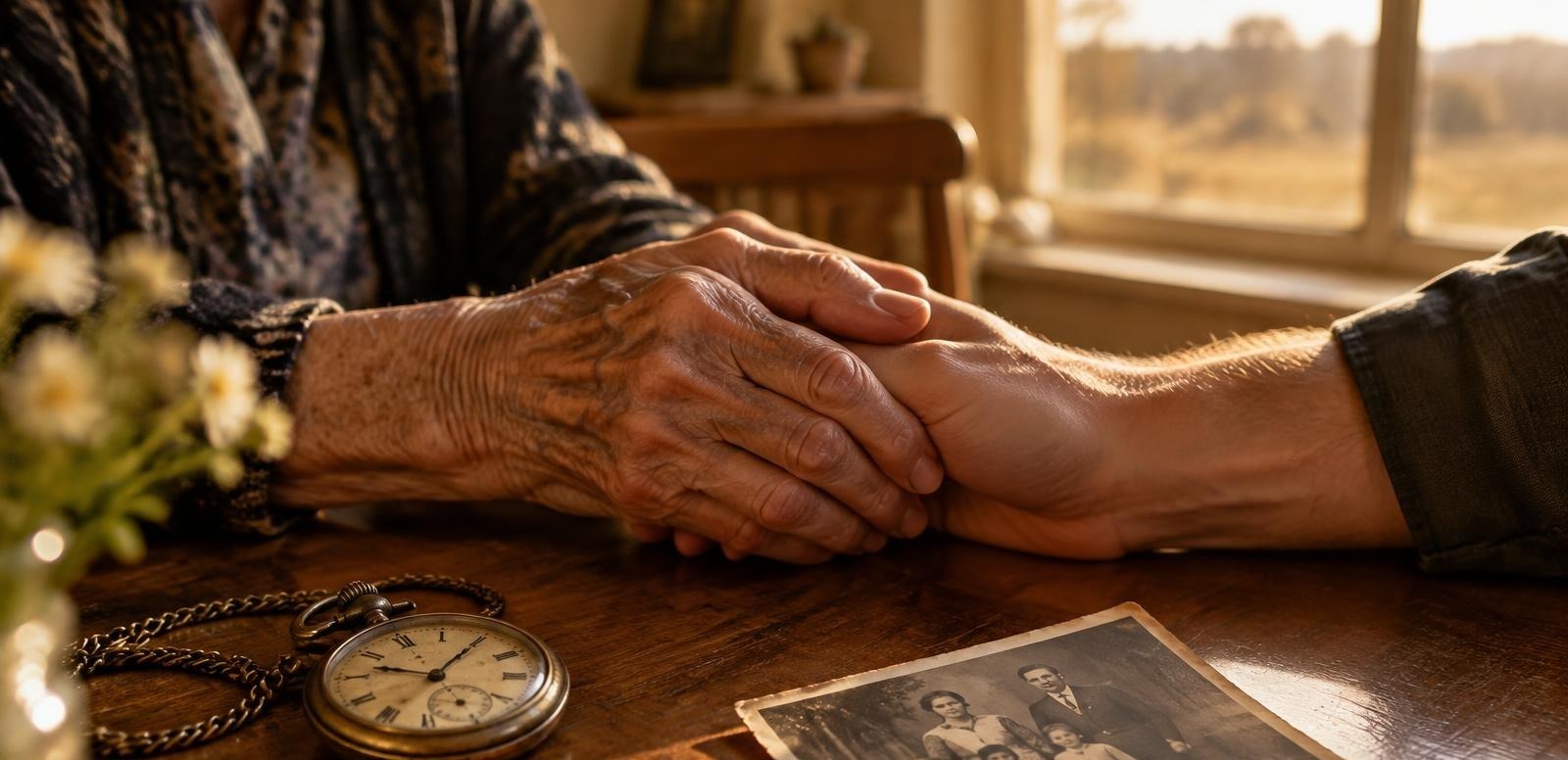
Time takes a great deal. It took the steadiness from my professors' hands and the strength from my teacher's voice. It took my parents altogether. It has already taken something irreplaceable from me. It will take from me, in due course, everything it has lent.
But it does not take everything. What it keeps is character. The people in that hall had lost much, yet what remained of them was unmistakably who they had always been, distilled. Their courtesy survived. Their curiosity survived. Their care for a former pupil survived. When everything else is stripped away, it seems, what is left is the shape of how one chose to live.
That is the instruction I carried home. To live with integrity and by example, since example is the only teaching that outlasts the teacher. To be grateful for each day, each experience and each person who crosses my path, whether in passing or for a longer season. To add value in whatever I do, so that what I leave behind is a net gift to the world rather than a debt. And, when my own reserve begins to run low, to carry the decline as they carry theirs: upright for as long as I can, gracious when I cannot, turning my attention outward to the last.
One day, if I am fortunate, I will be the old man in the hall. Someone I once taught, or operated on, or simply encouraged, will come home and find me there, diminished, and will feel the same cold current of sadness I felt this week. I hope that beneath it they will also feel what I felt: admiration, gratitude, and the quiet conviction that a life well lived does not end in defeat, but in a kind of well-rounded, natural completion.
I went home this week, and my teachers taught me one more lesson. It may have been their best.