
OCTOBER 23, 2026
The Lie Has Already Laced Its Boots
by Dr Wilhelm Lichtenberg

A quote that proves its own point
"A lie can sprint across continents, poison minds, and erect statues to itself, while the truth is still pulling on its boots."
You will find that line on posters, in slide decks and across social media, almost always with Søren Kierkegaard's name beneath it. It is a wonderful sentence. There is just one problem: nobody has ever found it in anything Kierkegaard wrote.
The idea itself is much older and much better documented. In 1710 Jonathan Swift wrote in The Examiner: "Falsehood flies, and the Truth comes limping after it." Over three centuries, this thought has been polished, sharpened and reassigned to whichever famous name made it sound weightiest. Mark Twain and Winston Churchill have both been handed versions of it, and neither appears to have said it.
I love the irony of this. A saying about how falsehood outruns truth has itself outrun the truth about where it came from. It spread because it was memorable, because a famous name made it feel authoritative, and because almost no one who shared it stopped to check. Keep that pattern in mind. It is exactly how the most damaging lies of our time travel.
The vaccine story that would not die
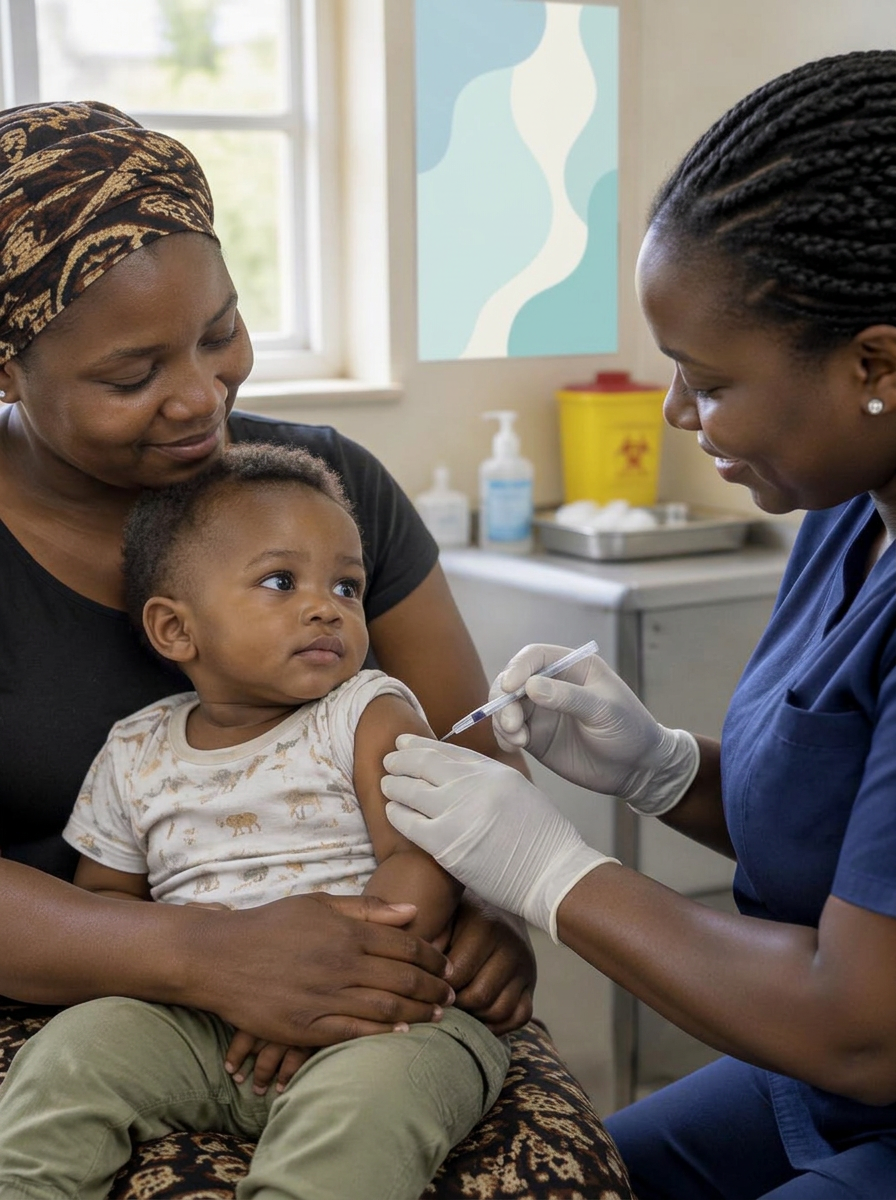
In 1998 a British doctor named Andrew Wakefield published a paper in The Lancet suggesting a link between the MMR vaccine and autism. It was based on just twelve children. Other researchers could not reproduce it. An investigation by journalist Brian Deer later showed that the data had been manipulated and that Wakefield had undisclosed financial interests. The Lancet retracted the paper in 2010, and Wakefield was struck off the UK medical register the same year.
By any normal measure, that should have been the end of it. Since then, study after study involving millions of children has looked for a connection and found none. A single Danish study in 2019 followed more than 650,000 children and found no increased risk of autism among those vaccinated.
Yet alarmingly, the claim survives. It returns with every new outbreak and every new vaccine. During the COVID-19 pandemic it was joined by a crowd of newer stories: microchips, altered DNA and secret depopulation plans, amongst a plethora of others. Some (if not all) were ludicrous. They spread anyway.
I have seen what preventable disease does to children's bodies. Measles is not a harmless rash. It can cause pneumonia, brain swelling and death, and it was largely beaten back in many countries before vaccine fear helped invite it back to the party. The retraction of one paper took twelve years. The fear it planted is still with us nearly three decades on. Swift was right: the truth arrived, but it came limping.
Why lies are so comfortable
Why does a debunked story outlive its debunking? Because a lie can offer something the truth often cannot: comfort without accountability.
Consider what the vaccine myth offers a frightened parent. Autism has no single, simple cause, and that uncertainty is hard to live with. The myth replaces it with a clear story: a villain, a moment when things went wrong, and someone to blame. It also excuses a choice. If vaccines are dangerous, then not vaccinating becomes an act of protective love rather than a risk taken on behalf of a child and the children around them.
Mark Twain, a master at puncturing our flattering self-images, put it with his usual dryness in an 1898 notebook entry: "Truth is mighty and will prevail. There is nothing the matter with this, except that it ain't so." He understood that truth has no special engine of its own. It needs people to carry it, and people prefer to carry what feels good.
Four centuries ago, Francis Bacon observed that we are more likely to believe what we would prefer to be true. Psychologists now call it confirmation bias, but the instinct is ancient. The physicist Richard Feynman gave the best warning about it: "The first principle is that you must not fool yourself, and you are the easiest person to fool."
Kierkegaard, who did not write the line about the boots, did write something sharper. In Works of Love he warned that there are two ways to be fooled: believing what is untrue and refusing to believe what is true. The anti-vaccine movement manages both at once.
The machine that gives the lie its wings

In Swift's day, a falsehood flew at the speed of a stagecoach and a printing press. Today it moves at the speed of a mouse click or a repost.
"Whoever controls the media controls the mind." The line is usually credited to Jim Morrison, but whoever first said it, the warning has aged well. A constant stream of fear and sensation narrows our attention. Frightened people think less carefully and share more quickly, which makes them easier to steer.
Social media did not invent misinformation, but it built an almost perfect habitat for it. Three features matter most:
•Speed and scale. A 2018 MIT study published in Science tracked over a decade of stories on Twitter (now X). False news reached people far faster than true news and was about 70% more likely to be shared, fuelled by emotion and novelty.
•Algorithms that reward reaction. Platforms earn money from attention, so their feeds promote whatever keeps us scrolling, commenting and arguing. Outrage and fear perform brilliantly. A careful correction rarely does.
•Echo chambers. Once we engage with a claim, we are shown more of it, and more people who believe it. A fringe idea starts to feel like common sense because everyone in our feed seems to agree. The number of likes a post gets is used as evidence that it must be true.
The machine has grown more powerful still. Generative AI can now produce convincing articles, fake "expert" videos and fabricated screenshots in seconds, at almost no cost. The lie no longer needs to pull on boots. It can be manufactured in bulk, already dressed.
Neil Postman saw a version of this coming in 1985. He argued that the bigger danger was not George Orwell's world, where truth is hidden from us, but Aldous Huxley's, where truth is drowned in a sea of distraction. We are living in that sea, and a tsunami is building.
We are not helpless, and not every alarm is false
It would be easy to end there, with ordinary people cast as passive victims of the machine. That would be its own kind of comfortable lie.
Audiences are not simply passive. People question, compare and push back every day. And not every alarming report is manufactured. Real threats exist. Vaccines, like all medicines, can have genuine side effects, and the honest way to talk about them is openly, with numbers. Pandemics are real. So are corporate cover-ups and official mistakes. Sometimes the alarming story is the true one.
There is a danger on the other side too. Hannah Arendt, who studied how propaganda works, warned in a 1974 interview: "If everybody always lies to you, the consequence is not that you believe the lies, but rather that nobody believes anything any longer." A person who trusts nothing is just as easy to lead as a person who trusts everything. Blanket cynicism is not wisdom. It is surrender in a cleverer disguise.
The real challenge is discernment: learning to tell genuine threats from narratives designed to exploit them. Paraphrasing Senator Daniel Patrick Moynihan, everyone is entitled to their own opinion, but not to their own facts.
Reading is not research
Few phrases have done more damage to public health than "do your own research." It sounds like intellectual independence. In practice, it usually means an evening spent watching videos and reading posts that someone else's algorithm chose for you.

Let's be very clear on this: reading something on the web does not constitute research. That bears repeating. Real research is discipline, dedication, honesty and true academic rigour, not a browsing session. A researcher starts with a question, not a conclusion. They decide in advance what evidence would prove them wrong. They gather data systematically rather than collecting only what fits. Their currency is actual data, not opinions. They account for bias, chance and confounding factors. Then they hand their work to other experts whose job is to find its flaws. Wakefield's paper failed these tests, which is how we know it was wrong.
Typing a question into a search engine does none of this. The results are ranked by popularity and engagement, not accuracy. The phrasing of the question shapes the answer: search "vaccine injuries" and you will find injuries. Each click teaches the platform what you want to see, so the next page agrees with you a little more. What feels like discovery often becomes nothing other than a hall of mirrors.
This is not snobbery about expertise. A curious, well-read lay person can learn a great deal, and should. But there is a difference between being informed and being able to judge primary evidence. I spent years learning to read a clinical trial properly, and I still lean on colleagues and statisticians when I have questions. Particularly so when a study falls outside my field. Knowing the limits of your own competence is not a weakness. It is the first thing real research teaches you.
Isaac Asimov famously lamented the stubborn strain of thinking that "my ignorance is just as good as your knowledge", which underscores this and leads directly into the argument posited by Messrs. Dunning and Kruger, who showed that the least competent tend to be the most confident. Twenty minutes online does not change that. It only makes ignorance feel more confident, and the person who shouts loudest does not necessarily win the argument.
Small acts of intellectual independence
We cannot redesign the algorithms on our own. But we can change what we do in the few seconds between reading something and passing it on. A few habits help:
1.Pause before you share. Strong emotion is a warning light, not a green light. If a post makes you furious or frightened, that is precisely when to slow down.
2.Ask who is speaking. Who wrote this, what do they know, and what might they gain if you believe it? A famous name in a caption is not a source, as our Kierkegaard quote shows.
3.Look for the evidence, not the anecdote. One dramatic story is not data. Ask whether independent studies, or experts with no stake in the answer, reach the same conclusion.
4.Check whether others have checked. Reputable fact-checkers and health authorities often address viral claims within days. A quick search of their sites costs a minute. Looking something up is not the same as researching it.
5.Notice when a story flatters you. If it confirms everything you already believed and paints you as the clever one, be most suspicious of all.
6.Be willing to say "I was wrong." Changing your mind in the face of evidence is not weakness. It is the whole point of thinking.
7.Know whose expertise you're relying on. Imagine being a passenger on a transcontinental flight. Would you walk into the cockpit, tell the pilot to move over and take the controls? Would you do it based on a YouTube video telling you that aeroplanes are being flown badly by all pilots, endangering millions of lives, and that companies like Boeing and Airbus are keeping the facts hidden?
Carl Sagan offered a simple rule for all of this: extraordinary claims require extraordinary evidence. A secret global plot hidden in a vaccine vial is an extraordinary claim. The evidence offered for it has never come close, if any exists at all.
Lacing our own boots

Swift's image of a limping truth is three hundred years old, but it is still accurate. Perhaps even more so today, and certainly on an infinitely larger scale. But truth limps partly because so few of us offer it an arm. Every time we pause, check a source or decline to forward a rumour, we slow the lie down a fraction and give the truth a little more time to catch up.
Leo Tolstoy understood what is at stake. Writing from the besieged city of Sevastopol in 1855, surrounded by the propaganda and heroic mythology of war, he refused to glorify any general or soldier. Instead, he ended his account with a declaration: "The hero of my tale, whom I love with all the power of my soul, whom I have tried to portray in all his beauty, who has been, is, and will be beautiful, is Truth." Truth may limp, but it is worth loving, and worth defending.
So, the next time a story confirms everything you already believe, or terrifies you into immediate action, ask yourself one honest question. Will you investigate it, or will you surrender your judgment to it?
The lie is already halfway across the world. The question is whether we will help the truth pull on its boots.