
MARCH 26, 2026
The Symphony of the Unseen
“Be not the slave of your own past — plunge into the sublime seas, dive deep, and swim far, so you shall come back with new self-respect, with new power, and with an advanced experience that shall explain and overlook the old.”
— Ralph Waldo Emerson
For thirty years, my life was a geometry of the finite. I existed within the high-tensile wire of the operating theatre, a world bounded by the rhythmic, insistent beep of the monitor and the absolute margins of the scalpel. It was a life of total dedication, a secular monkhood of technical mastery where clinical excellence was the only deity. I believed, with the quiet arrogance of the highly skilled, that my calling was my singular gravity, my only raison d’être. In the pursuit of that mastery, I often walked blindly past the quiet, opposing needs of my own hearth. I was a man of the city, of the urgent pager and the midnight scrub-in, a husband and father whose presence was too often an architectural ghost, haunting the edges of a home I was too busy to inhabit.
Then, the music changed.
A debilitating illness arrived. Not as a sudden orchestral crash, but as a slow, seismic shift in the key of my existence, stripping away the manual dexterity and fine motor skills that were the very syntax of my identity. To lose the surgical hand is to undergo a kind of existential death. It is a forced reinvention that demands one stand before the mirror of the soul, naked and totally unshielded. Yet, in the collapse of that professional scaffolding, in the silence that followed the final closing of the theatre doors, I found, after many months, a radical and wonderfully liberating buoyancy.
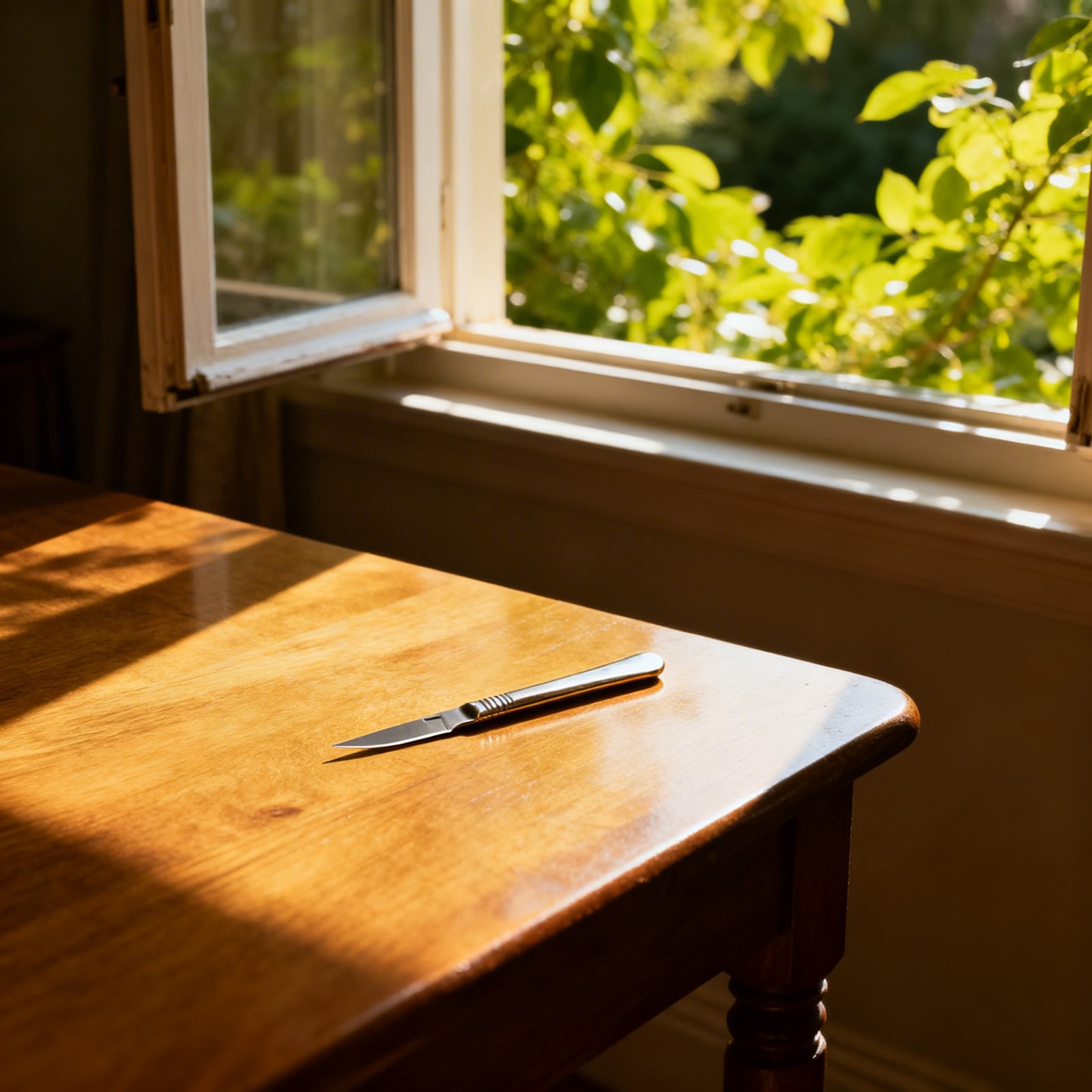
I packed up my office, my “home” for more than two decades. I sifted through the clutter, the artefacts of a blinkered existence, with mountains of material objects I had hitherto considered indispensable to my being. Testaments to my perceived reality and verifications of my presence.
I also packed up my modest home, with the little accoutrements I had accumulated, and relocated to the periphery of a venerable student town. Here, the air is thick with the golden-hued inquiry of the young and the ancient. It is a landscape that does not demand the unnecessary stress or the frantic, jagged tempo of the metropole. It is imbued with the romance of academic endeavour, the romance of youth, the glory of history, the splendour of the surrounding natural beauty.
The Archaeology of the Heart
The process of moving was more than logistical; it was a deep, at times agonising, interrogation of the soul. As I sifted through the boxes, I unearthed the heavy sediment of decades. There were the embossed scrolls, the glowing testimonials from university mentors, even my original birth certificate. A brittle piece of paper that seemed to mock the complexity of the man I had become.
I found the report cards and multiple awards of my own children, achievements that, in their quiet, unheralded brilliance, far surpassed my own in both number and significance. While I was focused on the clinical perfection of the stranger on the table, they were quietly mastering the art of being human.
I have often told them that “One day, when I grow up, I want to be like you.” Never has it been more apparent to me how genuine these sentiments are. They have lived, while I merely existed.

I looked at this mountain of paper and realized they were merely husks of the moment, devoid of the living breath that once gave them weight. We cling to such clutter, I realize now, because of a trembling, ancestral anxiety. A fear that if we move beyond our comfort zones into the uncharted territory of a life without a title, we will vanish unless we have a certificate to prove we were once there.
And so, with a heart finally at peace, I discarded them. All of them. I kept the memories. I surrendered the paper.
No material object, however gilded or embossed, can act as a container, an artifact for the soul. The only treasures we truly carry across the threshold of change are our convictions and the knowledge that love is the only permanent architecture of a meaningful existence. Practiced effectively, these sentiments should be self-evident, but they seldom are.
It is incumbent upon us to bury these riches in our hearts and minds, rather than demeaning them to the status of a folder. We must convey them to the ones who matter as living wisdom, not as dusty trophies.
The Luxury of the Slow Movement
In the silence of my new home, the world has taken on a different resolution. In the city, time was a resource to be managed, a series of billable increments and emergency windows. Here, time has become a texture.
I find myself drawn to the gentle life lessons imparted by the heirlooms of my parents and grandparents, objects I once viewed as mere domestic background noise. In the worn patina of a silver spoon or the softened spine of an old volume of poetry, I finally heard the wisdom they had quietly offered while I was too busy listening to the beat of a career, climbing the rungs of a ladder propped against the wrong wall. Their lessons were not found in the mastery I once craved, but in the mystery of a life lived with open hands.
The student town nearby provides a perfect counterpoint to my introspection. Walking through its streets, I am surrounded by the vibrant, unfettered pursuit of knowledge. For thirty years, my learning was practical, applied, and survival-oriented. Now, I am a student of the unnecessary. I look forward to spending hours in the university library, not researching the latest bypass techniques, but interrogating the nature of a meaningful existence. I look forward to reading the philosophers I once dismissed as unproductive, the poets who understood that the shedding of an old self is the first step toward true sight.
The Garden of Second Chances
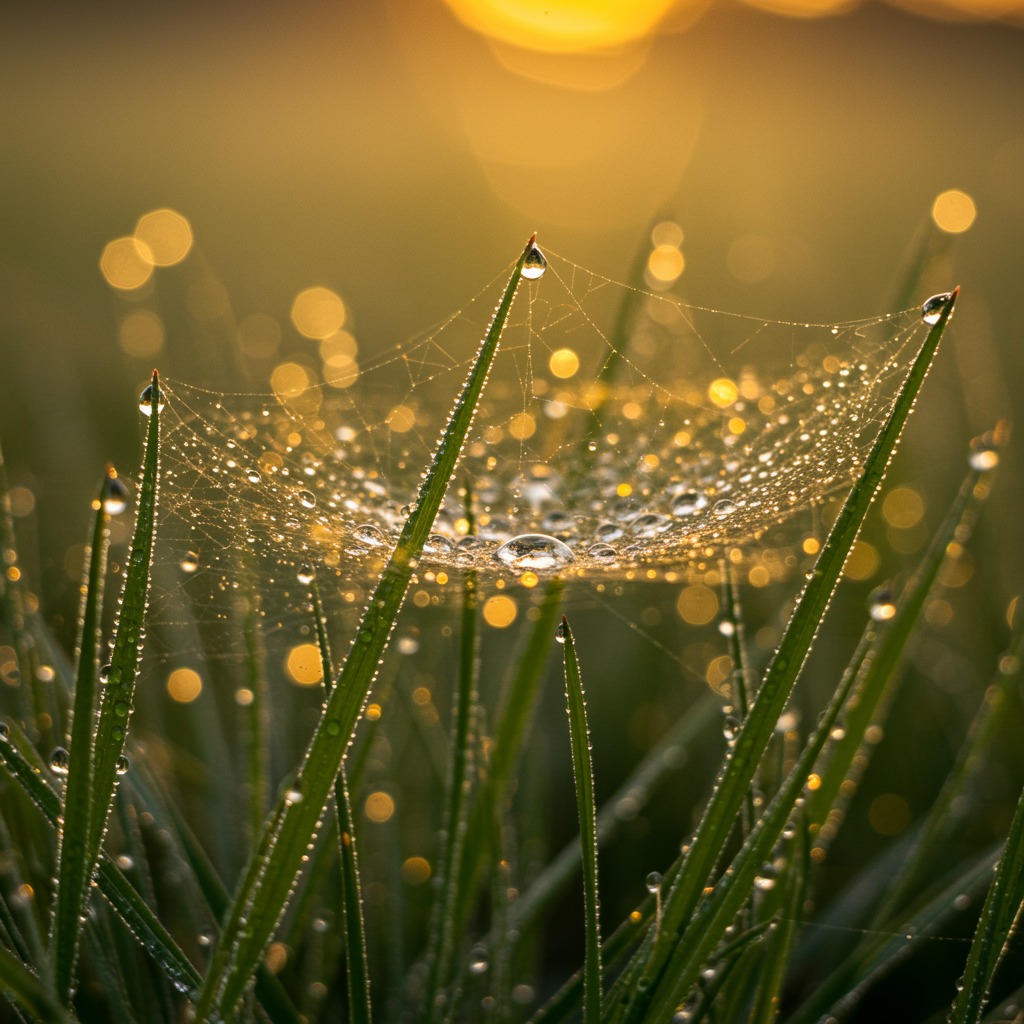
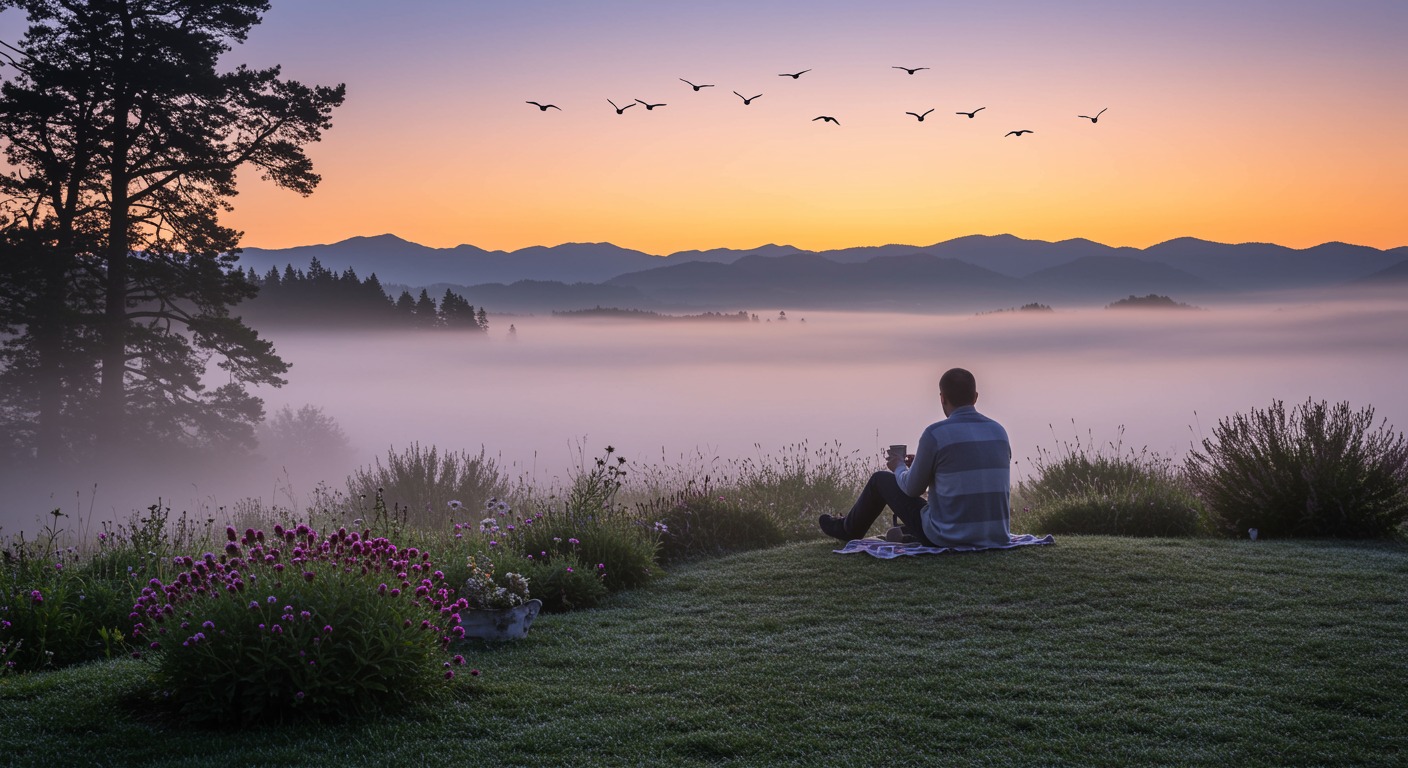
This morning, the dew lay across my small garden like a fine lace, a delicate embroidery that would have required a surgeon’s precision to replicate, yet it was gifted freely by the night. I sat with a cup of coffee and watched the clouds slowly drift past the mountains in the distance. The sound of birdsong and the odd lowing of a cow in the field adjoining my new home accompanied the sun’s ascendence from behind the hilltops in the East. There was no pager to disrupt the silence, no urgent chaos to pull me away from the present moment.
I realised that my illness, while robbing me of my dexterity, had gifted me something far more precious: the ability to hold a moment without trying to fix it. My single-minded pursuit of clinical excellence has been diverted into a more gentle, yet deeply inquiring pursuit of simplicity and clarity. I am no longer interrogating a patient’s pathology. I am examining and questioning the simple and delighting in its wonderful answers.
I have traded the noisy traffic of the ego for the profound gratitude of the careful observer. I look back at the privilege of my career with a profound, humble gratitude, but I look forward with an exhilarating excitement that is far more resonant than any metaphorical applause afforded me by success in the theatre of surgery.
The Final Resolution
We are told that we are what we do. But as the sun finally broke through the mist this morning, illuminating the garden in a soft, Brahmsian gold, I knew that was a lie. I am not the scalpel, I am the hand. And even when the hand is still, the soul is in motion.
I seek to simplify, clarify, and enrich my life with the glory of this new examination. I have concluded a wonderful, lasting peace with my new reality and am looking forward to this chapter with positive anticipation. The radical shift from the city to the country was not just a move of house; it was a move toward the light.
The surgeon has laid down the steel, only to find that when the hands are empty, the spirit is finally, and magnificently, full. I am aware of the extent of the privilege and the blessings that have littered my path, and for the first time in thirty years, I have the time to stop and pick them up.
The surgery of the self was a success. The patient, and the doctor, are finally, truly, alive.