
FEBRUARY 13, 2026
The Winter of the Hands
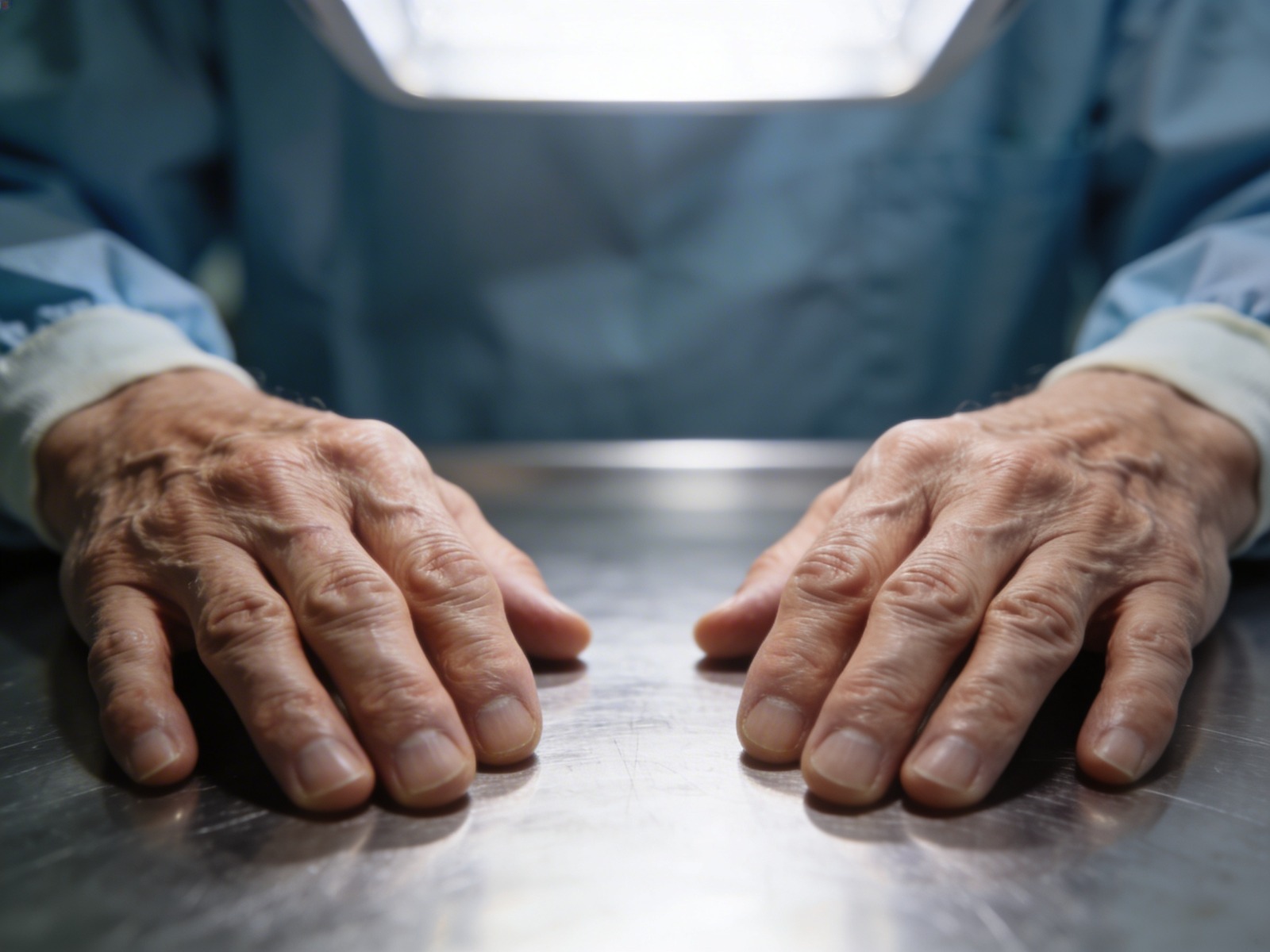
There is a certain stillness in the hands of a man who has spent thirty years fighting the clock, beating the odds and ensuring that every cut, every stitch is executed to perfection every time. No room for error, no midday slump or oversight, every second is measured, every heartbeat an ode to determination. And now, now this falls silent. But this new stillness, this thickening of the joints, this betrayal of the bone, is different. It is the arrival of a winter I did not invite.
For three decades, my life was measured in the rhythmic, mechanical click of a heart valve and the steady beep of the monitor in the operating theatre and the ICU. To be a cardiothoracic surgeon is to live in a state of controlled omnipotence. When the chest is open and the world is reduced to the size of a human heart, you are a conduit for a miracle. You are the magician who reaches into the red darkness to demand that the heart responds to your healing manoeuvres and that the ghost of death is exorcised by the bypass machine.
It was not merely my profession; it was my calling, my passion, my drive. My own pulse was calibrated to the life-support machines. My identity was etched into the steel of the scalpel and the monitor played the music of my intent.
Now, not by my own choice but fate, I am forced to lay down the scalpel. The arthritis has replaced the fine, quicksilver of my fingers with heavy lead. The hands that once navigated the microscopic geography of a coronary artery, now struggle with the buttons of a shirt. This is not a retirement; it is an amputation of the self.
The Illusion of the Superhero
In the high noon of my career, when the shadows always lengthened slowly, but the sun was never allowed to set as I battled against the clock to make use of the one opportunity I had to save the day, I lived behind the mask. It is a necessary armour. To carry the hopes of terrified families and the weight of “impossible odds,” one must believe, at least a little, in one’s own invincibility. As surgeons, we are trained to be pragmatists, to treat the body as a machine that can be mended with enough skill and enough will. We play the superhero because the alternative, to feel the very mountains we are constantly climbing crumble and collapse beneath our feet, is too much to bear while the clock is ticking.

But the loss of the ability to ply my craft has stripped away the costume. I have come to realise that my superhero cape is made of threadbare old cloth. I am left facing a devastatingly human reality: the healer is also a patient of time.
I thought I had dealt with this through sheer pragmatism. I told myself that every career has an end, that the joints wear out just as the valves of the heart do. But pragmatism is merely a stay of execution for grief. It is a shallow well that runs dry as time progresses and grief of loss overpowers the mind-over-matter veneer.
On a purely intellectual level, I realise that the sadness that resurfaces now is not a sign of weakness. It is the “Great Memory,” as Laurens van der Post might call it, which is finally catching up to me. It is the soul demanding to be heard, now that the hands are silent. There is a deep, visceral ache in realising I am no longer the surgeon who can perform the miracle. The magician has left the stage, and I am left standing in the wings, wondering who the man without the wand is.
The Shadow of the Mentor
The weight of this transition is made so much heavier by a profound silence. The recent passing of a colleague, a mentor, and a dear, dear friend to a monstrous illness which, quite apart from ultimately taking his precious life, robbed him of his own surgical identity and brought the curtain down on a brilliant, illustrious career, has suddenly amplified and accentuated this acute loss. It is loss he had to deal with himself, whilst facing the reality of his own mortality.
And he did so with quintessential valour, immense fortitude and a degree of dignity I have seldom witnessed. It was a profound and personal pain he confided to me once and, to my shame, the significance of it was lost on me at the time. But now I understand.
He taught me that surgery is as much about the spirit as it is about the anatomy. He was the man who held the mirror when I could not see my own exhaustion. To have to bid farewell to him now feels like a double exile.
I owe a deep deference to all my teachers, those gray-haired giants who looked over my shoulder and guiding me when I was young. Bringing me sharply back to earth with a timely rebuke when my youthful arrogance took over. But he was the one who taught me the “why.” He understood that the magician’s touch was a burden you had to earn the right to carry every day. He was the witness to my triumphs and one who truly understood the cost of the losses.
Now, I feel the vertigo of someone standing on a high ridge with no one to hold the rope. I find myself mourning him and my career as a single, tangled entity. Now that I can no longer perform the physical acts he taught me, I feel as though I am losing my connection to him all over again.
The library of my life has burned down just as I was trying to find the exit.
The Sacred Privilege
Yet, as the pain of the “amputation” begins to dull, it is replaced by something more luminous and enduring: a profound, heartfelt gratitude.
To have been a surgeon is to have been granted a seat at the very head table. It was a sacred privilege, an opportunity to participate in the most intimate and terrifying moments of the human story. I feel a staggering thankfulness for the years I was allowed to be the one who stood between a family and their grief. To have loved a calling so deeply, to have revered the craft with such religious intensity, is a gift that few are ever afforded.
I look back at thirty years of impossible odds and deep personal triumphs and I am humbled by the fact that I was chosen for this work. It was not just a career. It was Grace. The exhaustion, the long nights, the weight of the losses were a small price to pay for the sheer, radiant joy of seeing a heart begin to beat again under my own fingers. I have lived a life of purpose so sharp it could cut, and for that, I am eternally indebted to the universe.
The Wisdom of the Witness
As I navigate this unknown new landscape, I am finding that the magician had to die so that the sage could be born. I am learning that being a healer was never truly about what my hands could do. It was about the care I carried in my heart. The arthritis has taken my motor coordination, but it cannot touch the thirty years of humanity I have witnessed.
Van der Post wrote that we all have a desert to cross and perhaps this loss of utility is mine. In the desert, there are no titles. There is only the sun, the sand, and the truth. But the infinite night skies over the desert also allow clear sight of the stars by which to navigate!
I am learning that the loss of the doing is not the loss of the being. The triumphs remain. The lives saved are not erased because my hands are now painful and stiff and clumsy. They are living legacies, heartbeats continuing in the world that I helped to sustain.
The vulnerability is sacred. There is a dignity in this decay. By becoming the one who is broken, I finally understand the patients I once looked down upon from the height of my competence.
My friend is gone, but the way he saw the world, with a fierce, compassionate, and mature love, is now my inheritance.
The Final Closure
The theatre is dark now. The instruments are stowed, and the silence is loud. But in that silence, I am discovering a new kind of medicine: one of reflection and acceptance. I am no longer a surgeon who fights the clock. I am a man who has finally learned how to listen to its ticking.
The winter is here, and it is cold. But it is also silver and clear. I see now that the superhero was a lonely role. In this forced humility, I am finally connected to the common thread of human suffering and endurance. I am no longer the magician on the stage. I am a man sitting in the stalls, watching the great, unfolding mystery of life with a heart that, while scarred, is profoundly whole.
I am a man who has seen the heart of the world, and though I can no longer touch it, I know exactly how it beats. And for the privilege of having known that rhythm, I am more grateful than I have words to say.