
SEPTEMBER 17, 2026
A Stage for Suffering
by Dr Wilhelm Lichtenberg & Manfred Noriskin-Ender
In 1759, the philosopher Adam Smith asked his readers to imagine something almost too large to picture: a man in Europe learns, one morning, that the whole of China - hundreds of millions of people - has been swallowed overnight by an earthquake. How would he react?
Smith's answer is uncomfortably accurate. The man would feel real sorrow. He would say sober, humane things about how fragile life is. And then he would eat his dinner, sleep soundly, and go on with his day, genuinely undisturbed, in any way that mattered to his own comfort, by the annihilation of a hundred million strangers. Yet if you told that same man he would lose his little finger tomorrow, he wouldn't sleep a wink.
Smith wasn't trying to shame anyone with this. He was trying to explain something true about how we're built: it isn't that we don't care about distant suffering. It's that our imagination simply isn't built to feel something we cannot see, touch, or place a face to. The finger is close. The earthquake is an idea.
Two hundred and sixty years on, the earthquake still happens in a hundred quieter forms. A famine here, a flood there, a child born a few hundred kilometres from the nearest surgeon who might have saved her. And most of us, myself included on plenty of days, still sleep well.
And yet, something in us already knows better
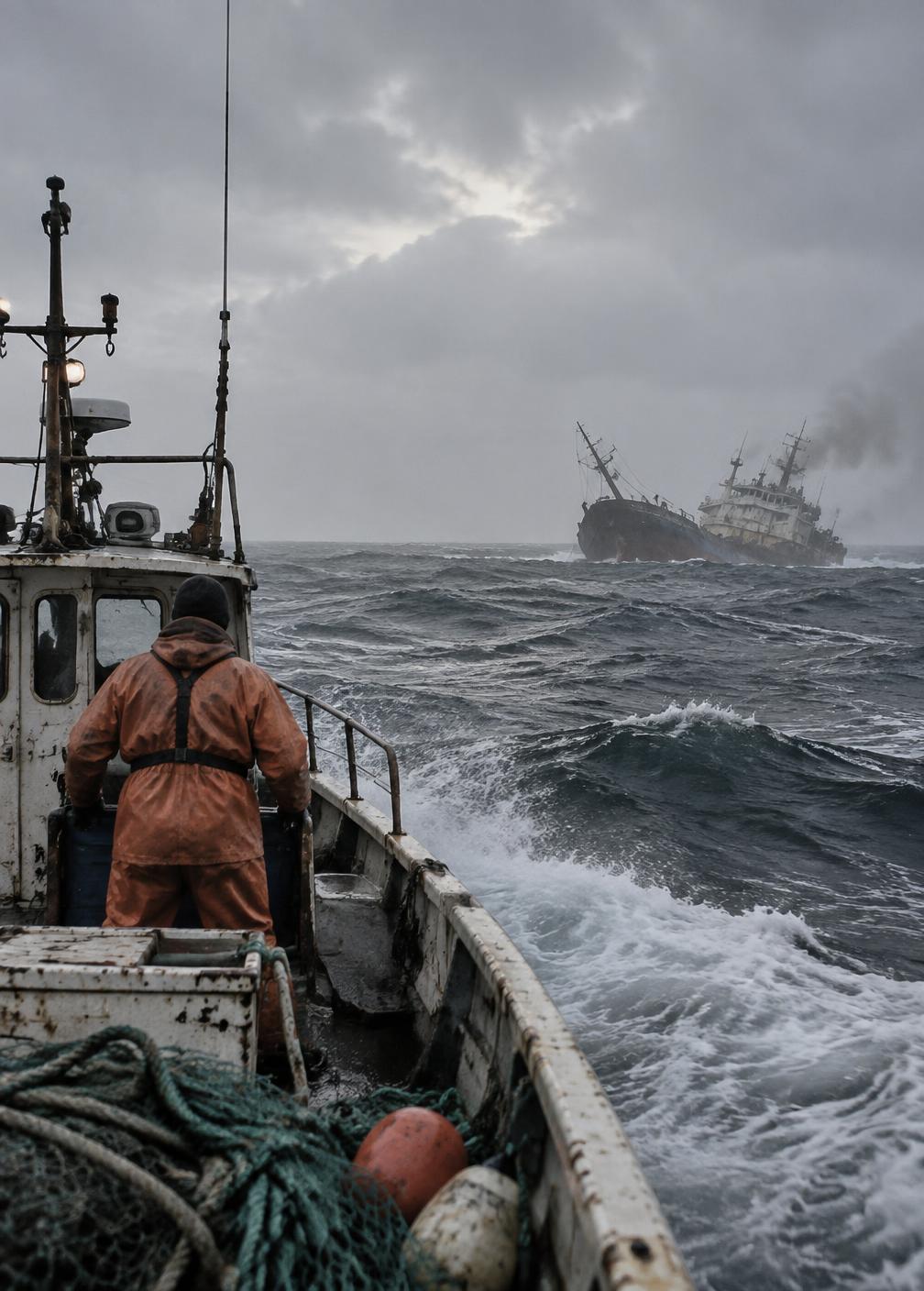
Here's the strange part. Long before any philosopher wrote a word about it, ordinary people already seemed to understand, instinctively, that a fellow human being's need creates a kind of claim on us. We don't get to simply shrug at a stranger's suffering just because we didn't cause it or are required by law to fix it. Why does the neighbour feed someone else's hungry children without being asked and the fisherman turn his boat toward a vessel in distress that isn't his responsibility? Nobody had to argue them into that. It came first, before any theory did.
The philosopher Peter Singer built an entire argument out of this deeply ingrained instinct in 1972. Picture a shallow pond, he said. A child is drowning in it. You could save her easily, but it would ruin your good shoes and make you late.
Nobody on earth would say your shoes matter more than the child's life.
Now, does it change anything, morally, if the child is not in front of you but ten thousand kilometres away, and "your shoes" are actually the price of a concert ticket, a subscription, a Saturday at the stadium? Singer's uncomfortable point: distance is a fact, not a moral argument. We just feel like it's an argument, because, as Smith already told us, our imagination fades with distance.
Not an accusation. A question worth sitting with.
I want to be careful here, because it would be very easy to turn this into a lecture; to point at what the world spends on sport and spectacle each year against what it spends on the survival of its poorest people, and call it a scandal.
In 2025, global spending on sports sponsorship alone was roughly 849 billion Rand. Total global corporate charitable giving during that same period sat at a fraction of that. And the world's wealthiest governments combined(!!), gave the equivalent of just 0.26% of their national income to development aid for the poorest countries. That share did not just fall - it collapsed by 23% in real terms compared with the year before - the steepest single-year decline ever recorded! This even as sponsorship and media-rights deals kept climbing.
Numbers like that are tempting to weaponise, but an accusation shuts a conversation down before it opens one. The more honest question isn't how dare we. It's how did we get here? How does a species capable of Smith's fine philosophy, capable of weeping at a single photograph of a single stranger, capable of the instinctive decency I described above, end up building a civilisation so thoroughly organised around its own entertainment that a rugby result can weigh more, in any given week, than a famine?
A clue from an old Roman
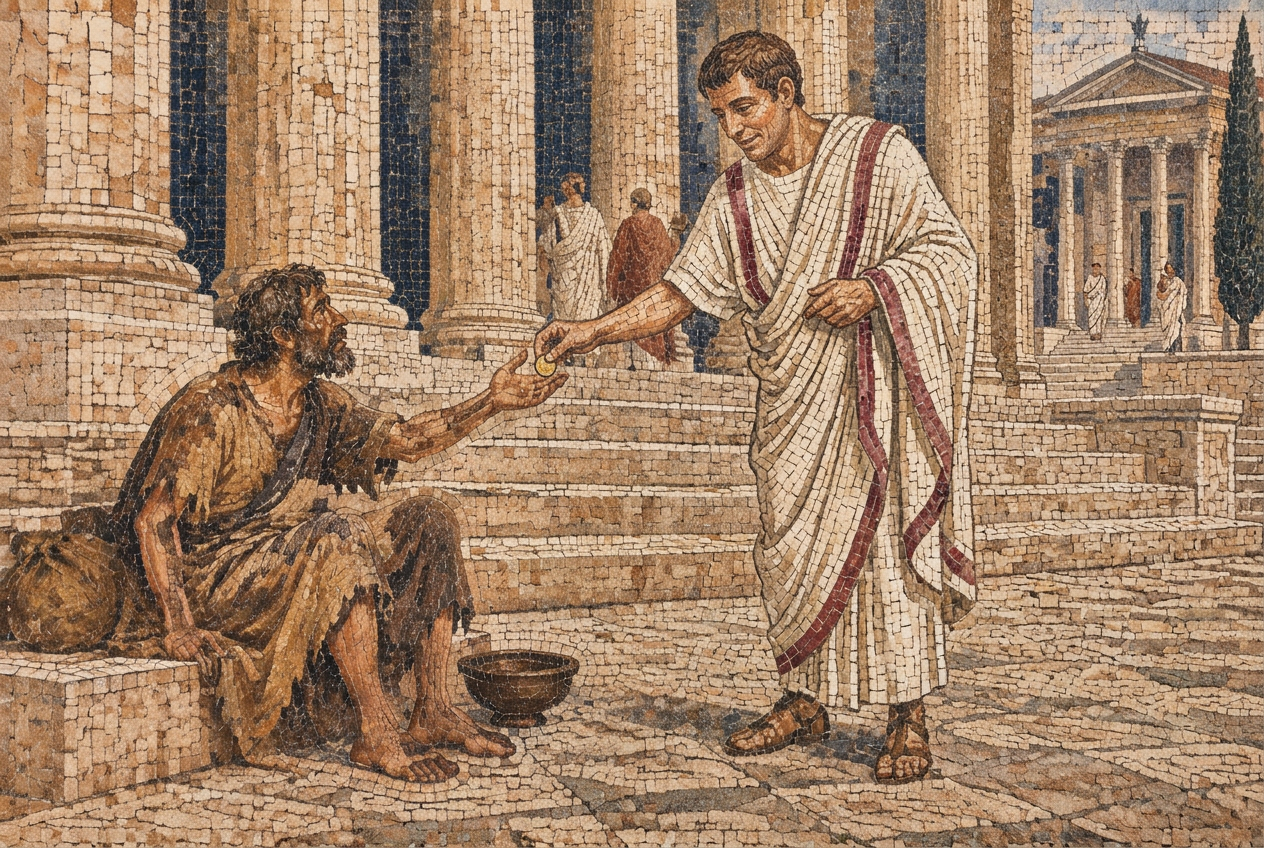
The philosopher Seneca, writing about the ethics of giving nearly two thousand years ago, offers something Smith and Singer don't quite reach. He wasn't just interested in whether people give, he was interested in how, and why. He drew a sharp line between giving that flatters the giver, the gift given for show, or to be rid of the asking, and giving that actually serves the person receiving it.
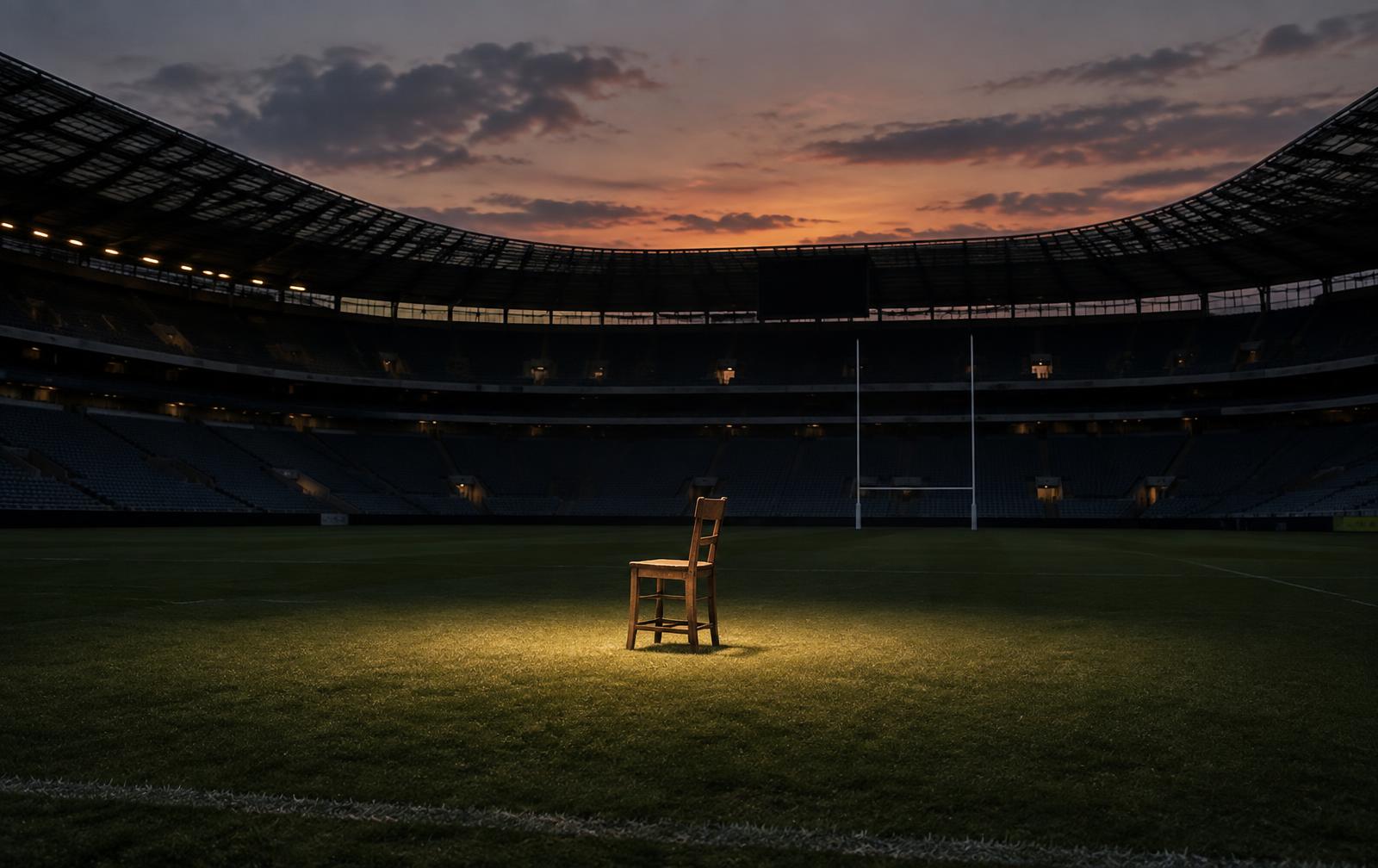
I think this points at the real answer. It isn't that we've lost our love for our fellow human beings, it's that we've built, with extraordinary skill, an entire architecture of vivid, immediate, shared feeling around our own entertainment. The roar of a stadium, the shared heartbreak of a final whistle. Yet we have built almost nothing of comparable vividness for the felt reality of a stranger's suffering. We haven't lost the capacity. We've simply never given it a stage.
Two stages, built very differently

Think about what it actually takes to feel something at a stadium. Years of investment go into it before a ball is even kicked. The rivalries are nurtured, the colours and anthems repeated until they're second nature. The commentary trained to find drama in every passing minute, the close-up camera finding the one face in the crowd that says everything. By the time you're in your seat, the feeling has been built for you, brick by brick, over decades. It doesn't arrive by accident. It's manufactured, deliberately and skilfully, because someone worked out long ago that vividness is what moves people. And moves their money.
Nobody has built anything close to that for the 2 year old child born three hundred kilometres from the nearest heart surgeon. Her story usually arrives, if it arrives at all, as a line in an annual report or a number in a funding appeal, competent, honest, but unfortunately almost totally unable to compete with a stadium roar for our attention. It isn't that we've stopped caring about her. It's that no one has built her a stage.
The stage we built without meaning to

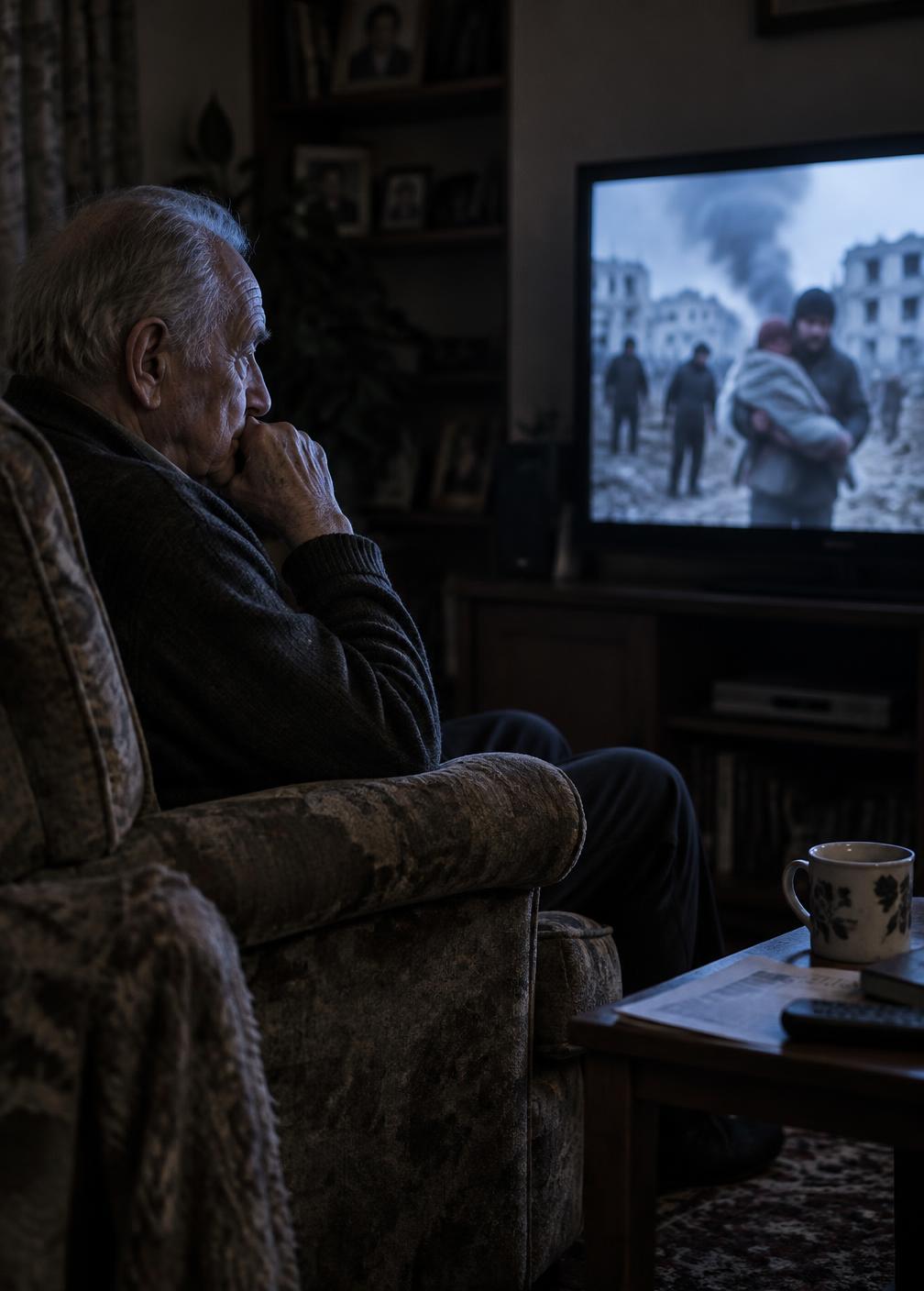
You might object here. Surely that has changed. The last two decades have put more raw human suffering in front of more people than at any point in history. War now arrives live, filmed on someone's phone in the wreckage. Social media serves it up with no editor standing between the event and your eyes. Film and television, largely free of the old content restraints, treat horror as a genre of its own. If vividness is what moves people, shouldn't all of this have closed Smith's gap by now?
It hasn't, and there is a well-studied reason why. The psychologist Paul Slovic has spent decades documenting something he calls psychic numbing, or compassion fade: our capacity to feel does not rise with the number of people suffering, it falls. In one series of experiments, people's willingness to help and their reported emotional response were highest for a single named child in need. Add a second child to the appeal, and both dropped. Keep adding children, up to eight, and both kept falling, even though the need, by any rational measure, had grown larger with every addition. Feeling runs in the opposite direction from scale, in precisely the place scale should matter most.
Susan Sontag reached a related conclusion from the other direction, watching what a lifetime of war photography had done to the people looking at it. Repetition, she argued in Regarding the Pain of Others, doesn't sharpen a viewer's horror. It dulls it into something closer to spectatorship, a habit of consuming other people's worst moments the way we consume anything else that's served to us continuously, without ever being asked to do something about what we've just seen. The unfiltered clip, the algorithm-fed horror, the news segment competing for the goriest six seconds - none of it lacks vividness. What it lacks is the one thing the stadium has in abundance: somewhere for the feeling to go. A crowd that's just watched a last-minute goal knows exactly what to do with what it feels. It stands up and roars. Someone who's just watched thirty seconds of a stranger's worst day, wedged between an advertisement and the next clip, mostly just keeps scrolling.
That, I think, is the quieter and more troubling part of this story. It isn't only that no stage was built for the stranger's suffering. It's that the one we eventually built, almost by accident - vast, unfiltered, running at all hours - has taught a lot of us to watch horror without flinching. And an audience that no longer flinches is not a neutral thing to have created.
We've also built a habit of looking away
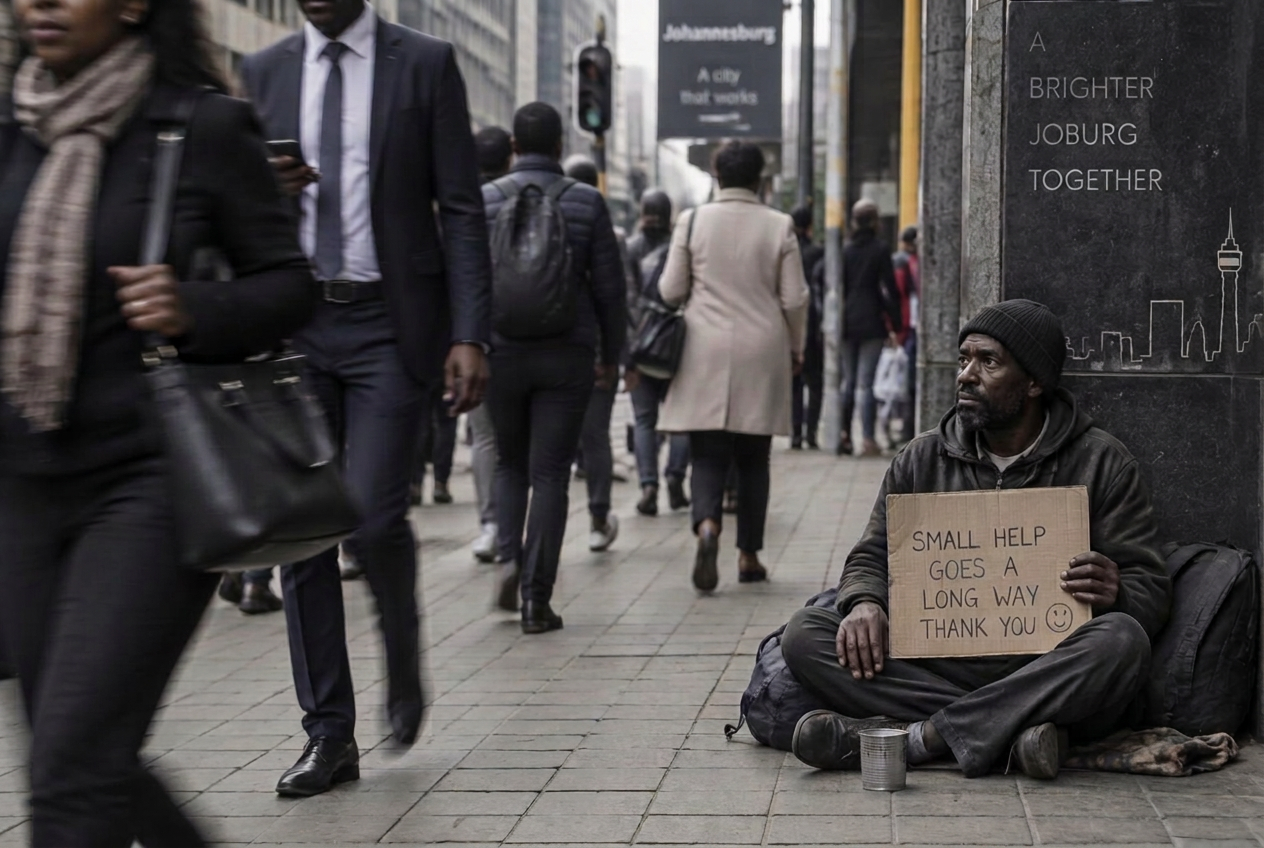
There's another piece to this, and it's less comfortable than the stadium story. It isn't only that no one built the suffering child a stage. It's that we've spent just as much effort building the opposite - an entire vocabulary and set of habits designed to help us avoid ever really seeing her. We say someone has "passed" rather than died. We call it "downsizing," not "families losing their income." We scroll past the photograph, we look away from the person on the pavement, we let the news segment run a few seconds and then reach for the remote. Discomfort has become something to be managed and minimised, not sat with.
That makes Seneca's distinction sharper than it first appears. It isn't only that our giving is often more about being rid of the asking than about the person in front of us. It's that the discomfort of seeing is itself the thing we've built our whole culture to help us avoid. A society this practised at softening its own language will always struggle to look straight at a child's suffering, because looking straight at it is precisely what that language was built to spare us from.
And this is where I think the instinct I described earlier - the neighbour who feeds someone else's hungry children, the fisherman who turns toward a shipwreck - actually matters most.
That instinct hasn't gone anywhere.
It's not a relic we've outgrown; it's raw material, sitting in every one of us, fully intact, waiting for something vivid enough to call it forward. We are not short of the capacity to care. We are short of the architecture that lets that capacity reach as far as it's actually meant to.
Which brings me back to Adam Smith's earthquake, and to the little finger he couldn't stop thinking about. The real distance in his story was never the physical distance between Europe and China. It was the much shorter distance between what the man could see and what he could only be told. That's still the gap we're being asked to close today. Not the ten thousand kilometres between us and the world's poorest, but the far shorter crossing between hearing about a life and actually being able to picture it.
Sport and spectacle have already shown us, brilliantly, that this crossing can be built. The only real question left is whether we're willing to build it for someone other than ourselves.