
AUGUST 24, 2026
The Chair I Now Occupy
On leadership, learned twice: once from the podium of a heart, once from the back row of an orchestra
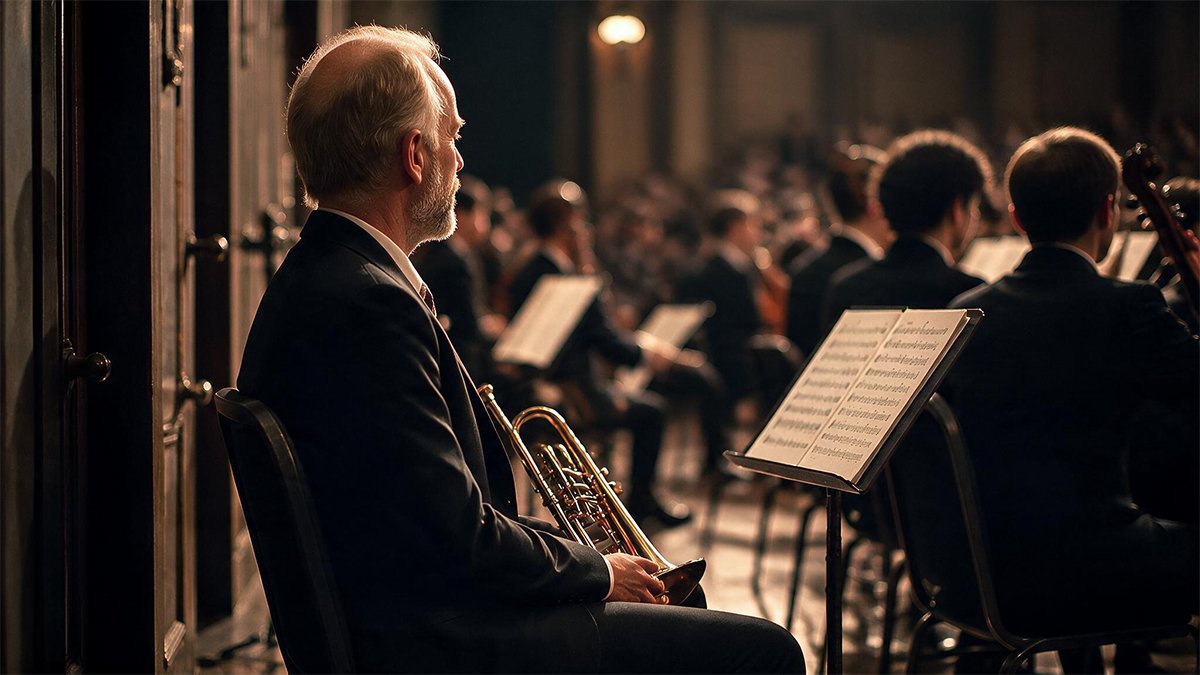
There is a particular chair in every orchestra reserved for the newest, least proven player. It sits furthest from the conductor's eye, deepest in the section, closest to the door. It is not a chair of consequence. Nobody auditions for years hoping to arrive there. And yet, at the age of 58, having spent three decades as the most consequential person in a room where a human heart lay open and stopped in my hands, I have just now arrived there - trumpet in lap, sheet music on the stand, and with a tremor in my hands I never once knew in the operating theatre. The oldest and least accomplished member of a symphony orchestra of prodigiously gifted young musicians.
I did not expect leadership to teach me its final and perhaps most important lesson from this chair. But it has. And I did not stumble into that chair by accident. I chose it, deliberately, the way a man returns to a well he once drank from as a boy, suspecting - quite rightly, as it turns out - that there was more in it than he had thought to draw the first time.
The Boy Who Was Allowed to Love Music But Not to Live By It
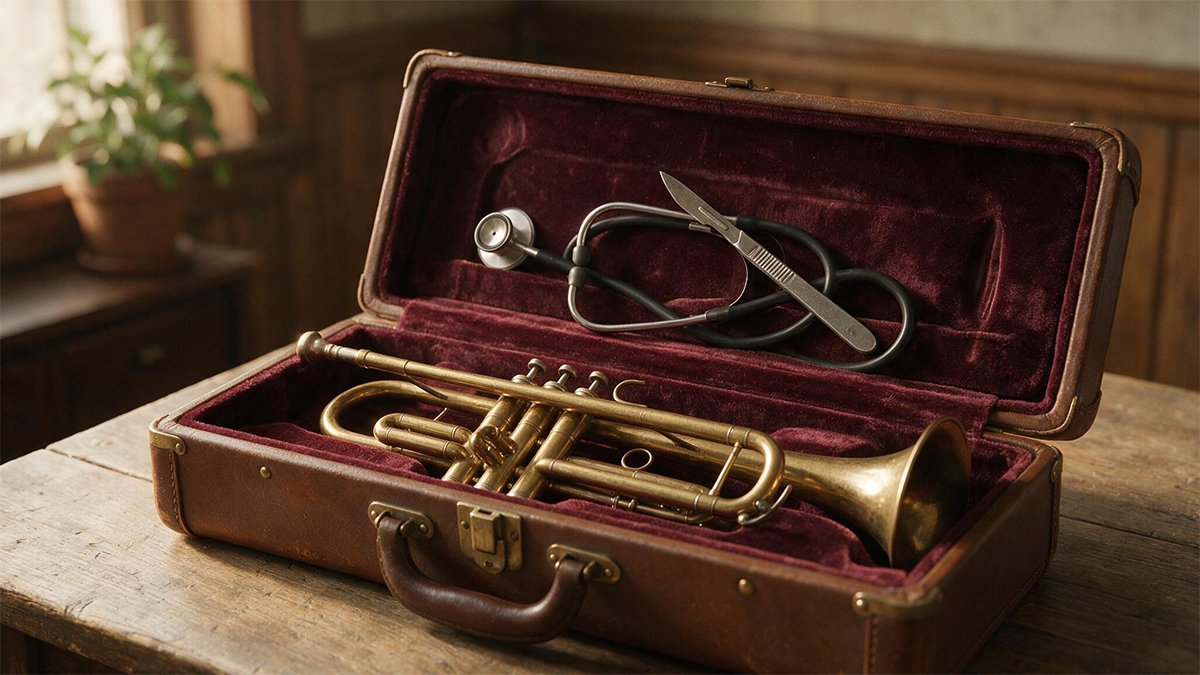
I have my father to thank for my deep love of music. He was a knowledgeable and devoted lover of particularly classical music and music was an ever-present inhabitant of my childhood home, almost like a much-loved sibling. He held great admiration for the legendary classical and jazz musicians of his time, but he believed that only the very gifted and the very best could make a decent living from music. Although he encouraged us to play instruments, he did not believe it held any future for us as a vocation.
As a teenager I played the trumpet enthusiastically, first in the junior and then the senior symphony orchestra. I was also an opera lover and a devotee of the likes of Luciano Pavarotti, and Kiri Te Kanawa. I dreamed of one day becoming a conductor and a singer like my idol, Placido Domingo and the thought of a life inside that sound filled my young imagination. My father, in his infinite wisdom, redirected that dream toward a career in medicine, with the quiet, immovable authority of a man who had lived through war and knew, in his bones, the difference between passion and provision. He himself had wanted to be a surgeon, like his own father before him, but circumstances prevented them from realising that dream. I suppose there was never any doubt about what I would end up doing.
And what an enormous blessing and a privilege that turned out to be.
As an obedient son, I followed the paternal direction and studied medicine, became a doctor, and eventually qualified as a cardiothoracic surgeon. This was, in the fullest sense, my true calling, and in my own idealised way I became a distant disciple of Christiaan Barnard, at whose desk I once sat and learned the work he had pioneered. I built a life of extraordinary purpose around that early obedience and remain unspeakably grateful for the people and circumstances which eventually allowed me to bring the family ambition full circle.
Yet the boy who once stood before a junior orchestra, baton trembling in a young hand, thrilled at the privilege of shaping sound out of a room full of children, never entirely left me. He simply waited.
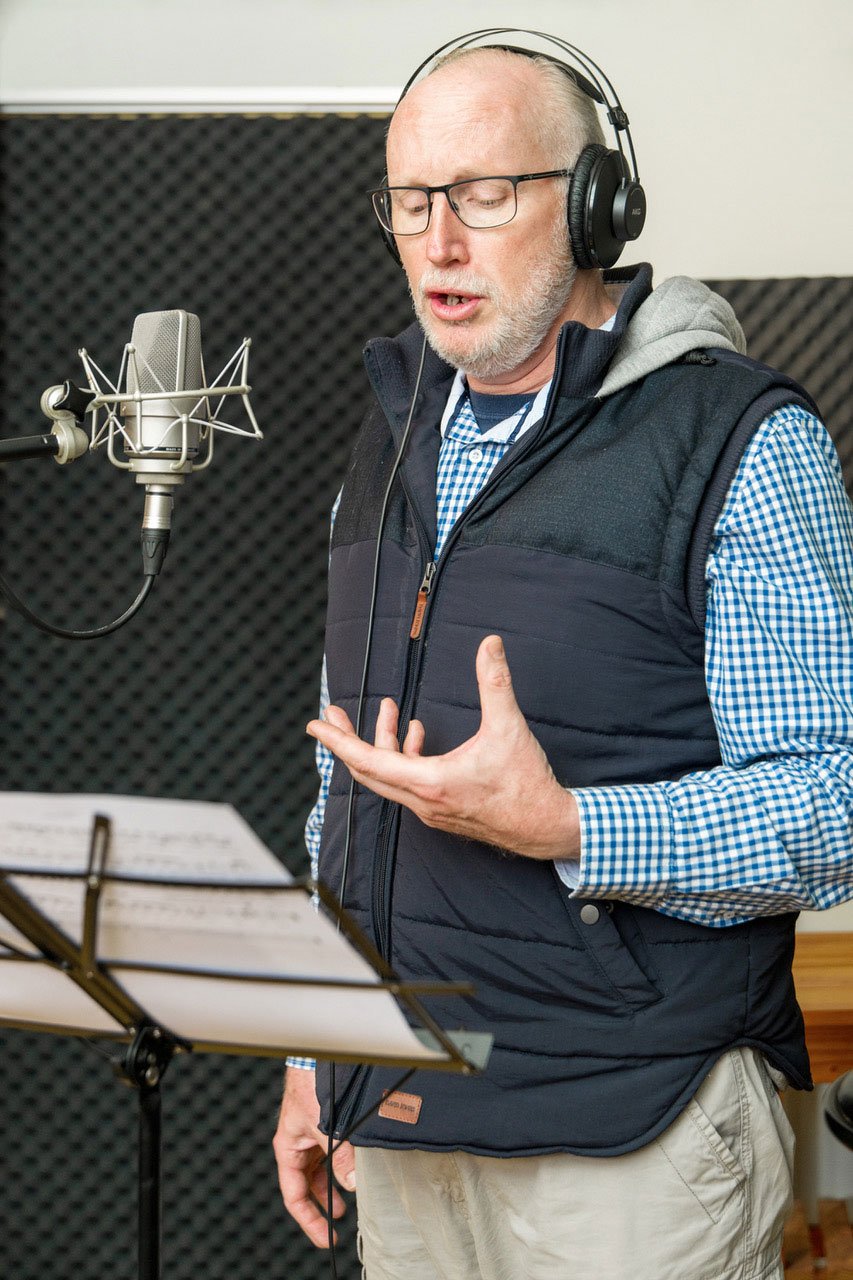
Some years ago, with a surgical career already decades deep, I let him back in and I began taking singing lessons. What followed surpassed my wildest dreams: two award-nominated albums, a recording with legendary Queen guitarist Sir Brian May, a national anthem sung before fifty thousand people at a rugby international, two leading tenor roles in Gilbert and Sullivan operas at the Cape Town Opera House, with a full orchestra and chorus behind me. I became, once again, a distant disciple, this time of Placido Domingo.
And then my arthritis took my hands from me, and from my great love affair with surgery. The instrument I had spent thirty years training into an extension of my own will - steady, exact, unforgiving of tremor – eventually deserted me. It had been a low, insidious onset and I knew it would eventually bring a premature end to my surgeon, but the suddenness of the deterioration was unexpected. In a way, the decision to walk away made itself. If I could no longer do the best possible operation for my patient, I shouldn’t operate at all!
I decided to call time on my love affair with surgery and walked away from the calling that had defined my entire adult life, albeit with a very heavy heart (pun intended.)
Once I had spent the necessary time to mourn my loss, I decided to devote the time I now had to cultivate a more meaningful relationship with my second love, namely music. I co-wrote and recorded new songs and I took my trumpet out of the cupboard and joined an orchestra.
What I Believed Leadership To Be
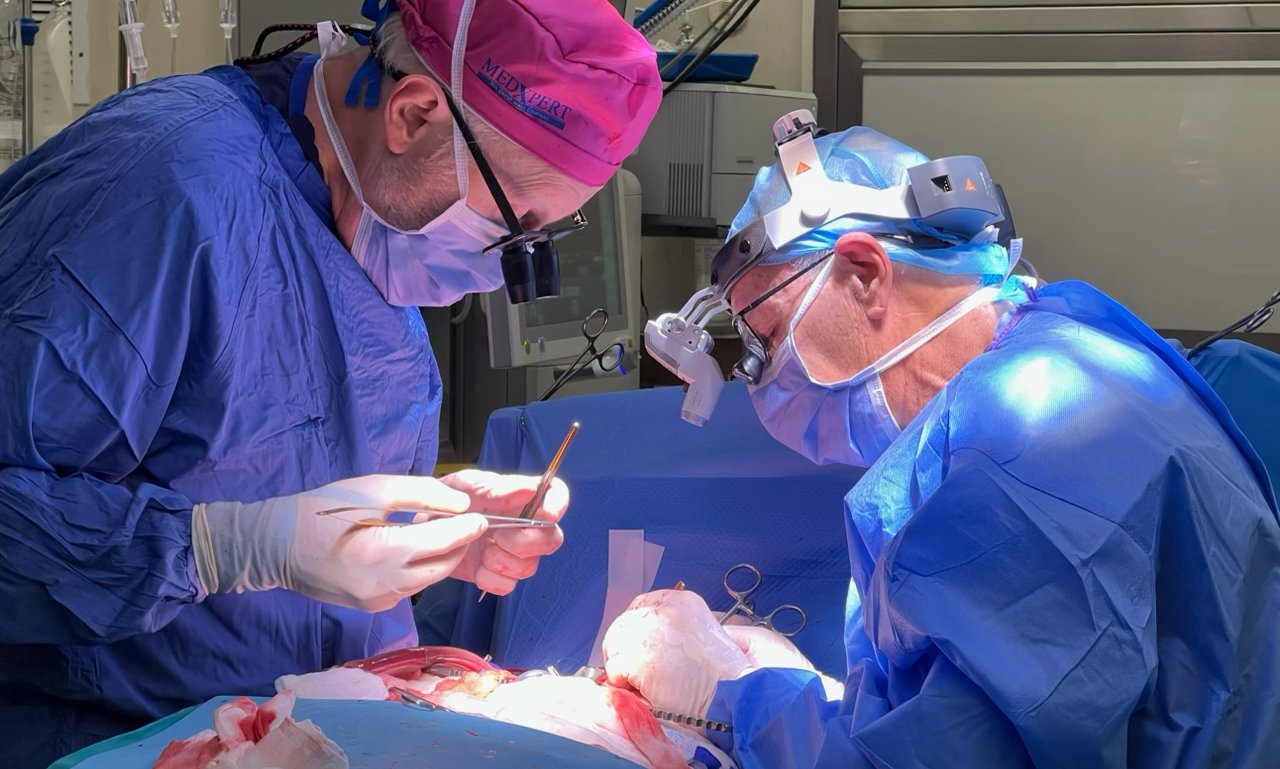
Over almost three decades, I had learned to lead a team through the narrowest of margins, where a life depended on the certainty of my judgment and the steadiness of my hand. I have always believed that true leadership is teaching and in the spaces I occupied, I tried to teach by example, rather than by decree. My conviction was, and remains, that every member of a team must know, without having to ask, that their leader trusts them completely; that the judgement, timing and instinct of the anaesthetist, the perfusionist and each member of the nursing team in that moment is trusted absolutely, each of them sovereign within their own field of expertise. A leader who cannot trust his team has already failed them before the work begins.
But trust freely given does not mean responsibility freely shared. I made certain every person in that theatre knew that whatever happened, however it happened, the account would ultimately be settled by me. Marcus Aurelius wrote, in a discipline I have tried all my life to practise, that a man wastes enough breath arguing about goodness. Better simply to be good. I did not need my team to admire my authority. I needed them to trust my humility enough to do their finest work unguarded and to know that if the outcome was ever anything less than what we hoped, the burden of that would be mine to carry, not theirs.
Seneca said that as long as we live, we must keep learning how to live. I did not understand, until I lost my old chair, how literally I would have to take that instruction.
Now I sit in a symphony orchestra as its most junior member, surrounded by musicians decades younger and immeasurably more skilled than I am and I am the one who must watch the conductor as the leader of this theatre. I am the novice. I am the one whose entrance might land half a beat late. I am, for the first time in more than thirty years, not the person keeping the beat and directing the flow. Returning to this role, I am becoming increasingly aware of the great, quiet privileges I have been afforded once more.
Because here is what I did not fully understand until I had to earn a new, humbler chair: a leader who has stopped being willing to be the least skilled person in a room has stopped growing.
Command without renewed humility calcifies into something brittle and self-regarding. An orchestra, unlike an operating theatre, does not survive on the brilliance of one player. A symphony's beauty exists only in the aggregate. In a hundred imperfect individual contributions, disciplined into a single coherent whole by a conductor who leads not by controlling each musician's fingers, but by drawing out of each of them a performance greater than any could produce alone. I have always believed that success ultimately depends on teamwork, rather than individual brilliance. As I regularly tell my children: “Life is a team sport.”
Learning to Walk Again So That I Might Run Once More
I wanted, quite consciously, to become a complete novice again. To feel, in my own body, what it is to be the least capable person in a room of talented people. To fumble an entrance, to be gently corrected by a section leader half my age, to learn to walk before I was permitted to run.
I wanted this not as nostalgia, but as instruction. A re-apprenticeship in humility, undertaken deliberately so that I might carry it forward into the leadership still ahead of me. Emerson wrote that we must learn to trust ourselves, that every heart answers to that same iron string. I have come to believe the truer discipline is trusting yourself enough to become, willingly, a beginner again, in service of leading others better.
I think now that this is what my father, in his own disciplined way, was trying to protect me from learning too early. The seduction of believing that leadership is the soloist's spotlight. He wanted me in a profession where leadership meant service under pressure, where ego had no room to hide. He was not wrong that surgery would teach me that. He simply could not have known it would take losing surgery, and returning - humbled, and by choice - to the very orchestra chair he once redirected me from, to teach me the second half of the lesson: that the finest leaders are also, without shame, willing and grateful students of their own beginning.
What the Back Row Knows
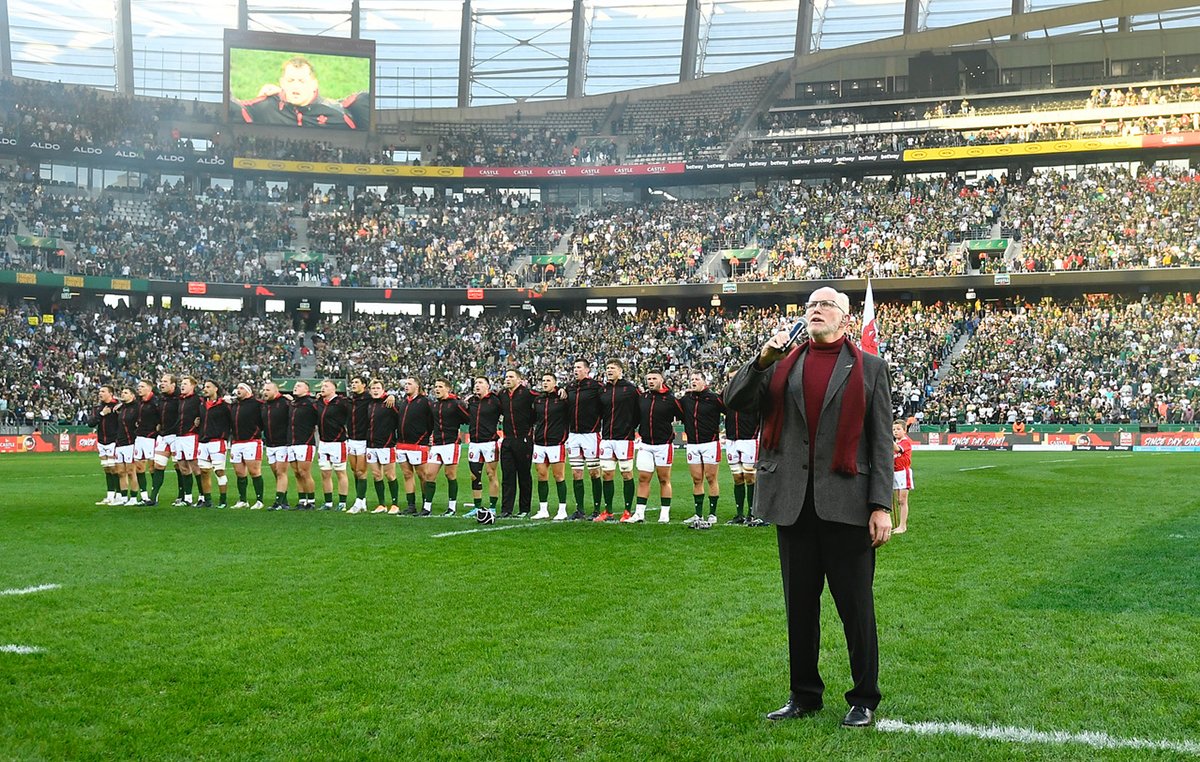
I have gone, in one lifetime, from junior member of a junior orchestra, to soloist and lead singer on a grand opera stage, sharing the stage and the recording studio with some of the finest musicians in the world. I have had the enormous responsibility, but also the greatest privilege, of being the lead surgeon in an open-heart theatre where I answered to no one but the patient's own failing heart. And now I have returned to being the most junior chair in an orchestra of musicians who could, every one of them, outplay me without trying.
What an extraordinary privilege that circle is. What a humbling, precious reminder of how brief and undeserved our time on this earth truly is. That a man could be permitted to lead, and then partly by choice and partly by circumstance, all over again, to learn.
I no longer believe leadership is a chair you rise to and then defend. I believe it is a chair you are willing to keep changing, right to the very end; sometimes at the front, baton raised, trusting your section completely and answering for all of it and sometimes, vitally, in the last row, watching for a cue, relearning what vast knowledge and unimaginable treasures there are to be the follower once again.