
JULY 27, 2026
The Outsider Looking In

On Disease, Health and the Long Apprenticeship of Not Knowing
Medical school taught me everything about illness and disease, but it taught me very little about health.
There is a particular humility that arrives late in a medical career. It is not the humility they warn you about in medical school. It is not the humility of a difficult diagnosis missed, or a patient lost despite your best interventional efforts. It is quieter than that, and stranger. It is the humility of realising, almost forty years in, that you were trained exhaustively in one half of a discipline and left almost entirely uneducated in the other, in my opinion.
I spent three decades meticulously honing my craft. I came to know the heart the way a locksmith knows a mechanism: its valves, its rhythms, its failures, the exact geometry of where it goes wrong. I could tell you, with some confidence, how a heart dies. However, it has taken arthritis, of all things, an indignity of the very hands that once held that knowledge, to force me to ask a different question entirely: not how does a body fail, but how does a body thrive?
And I find that I do not know.
Please don’t get me wrong. This is not a complaint against my training. I think the training my contemporaries and I received was absolutely world-class, and I have nothing but gratitude and reverence for my teachers and mentors. Medical school did what it set out to do. It made me a useful tool in the moment of crisis, competent in the architecture of catastrophe.
But it left the terrain before the crisis almost entirely dark. Health, in the curriculum I was given, was defined by absence: the absence of disease, the absence of symptoms, the absence of an abnormal value on a chart. It was never taught as a presence in its own right. As something to be cultivated, the way a garden is cultivated or practiced in the way faith is diligently practiced.
The Vantage Point of an Outsider
I find myself now in the unfamiliar position for a man who spent his working life at the centre of things: I am an outsider. I watch from just beyond the threshold as an entire field takes shape: Longevity Medicine, the gut microbiome, the gut-brain axis, mitochondrial and cellular health, the disciplined cultivation of sleep, movement, and stress as medical variables rather than lifestyle footnotes. And what strikes me most, watching from here, is not the novelty of the science. Much of it, on close reading, is not novel at all. It is old wisdom rediscovered under a microscope, dressed in new vocabulary and finally taken seriously by institutions built to treat, not to prevent.
Paraphrasing Richard Feynman, “science is what we do to keep us from fooling ourselves and that we avoid doing so at all costs, given how alarmingly easy self-deception can happen.” I think of this often now, because for thirty years I was, without quite realising it, fooled by the shape of my own understanding (or rather, the lack thereof). I mistook the absence of disease for an understanding of health, the way a man might mistake the absence of storms for an understanding of the sea.
Laurens van der Post wrote of the African bush that its wisdom was not something one arrived at by conquest, but by long, patient attention. That the land revealed itself only to those willing to sit still long enough to be taught by it. I think health is like this. It does not yield to intervention. It yields to attention, sustained over years, paid before the crisis rather than after it.
The Engine Room I Never Appreciated
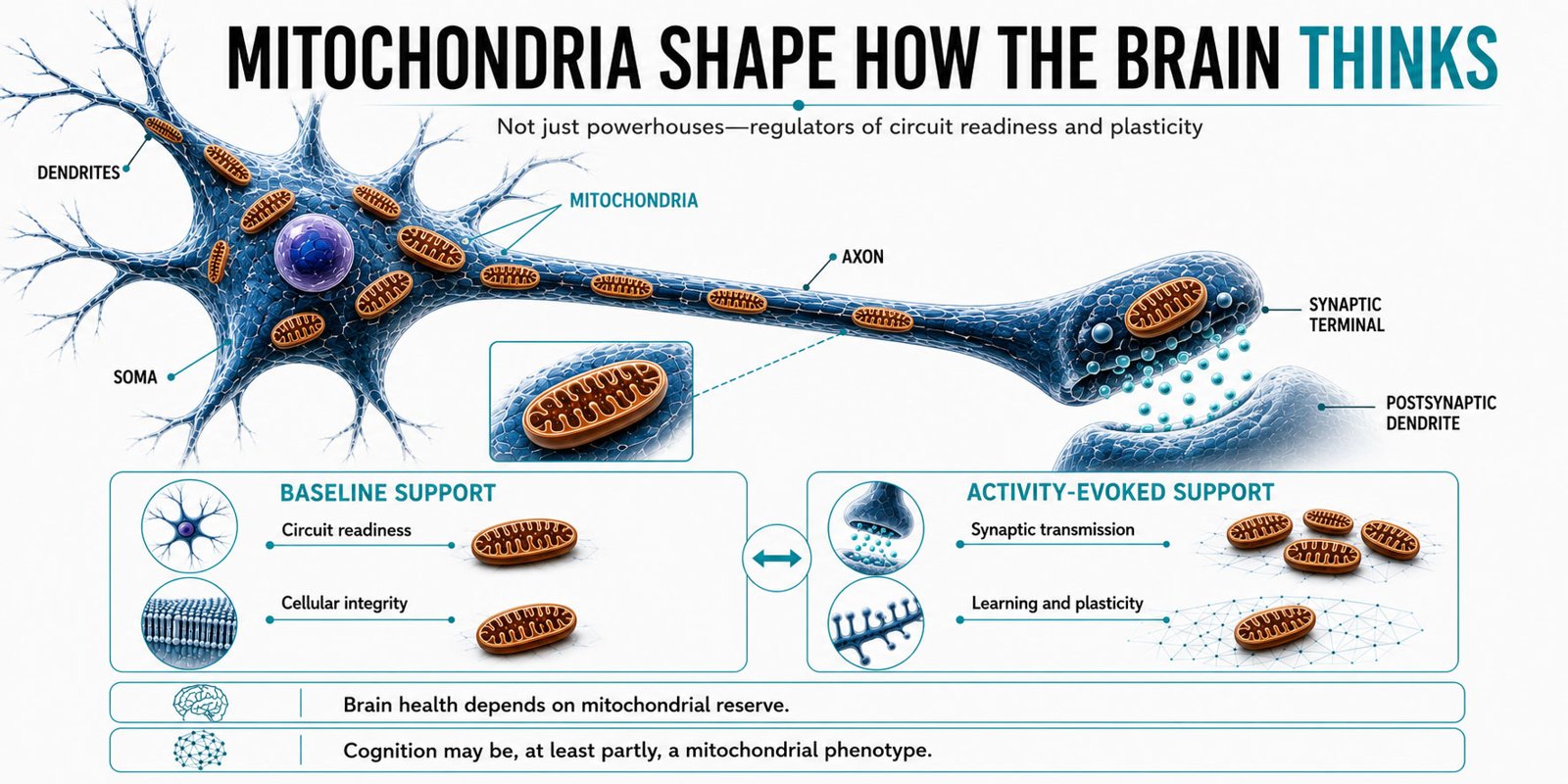
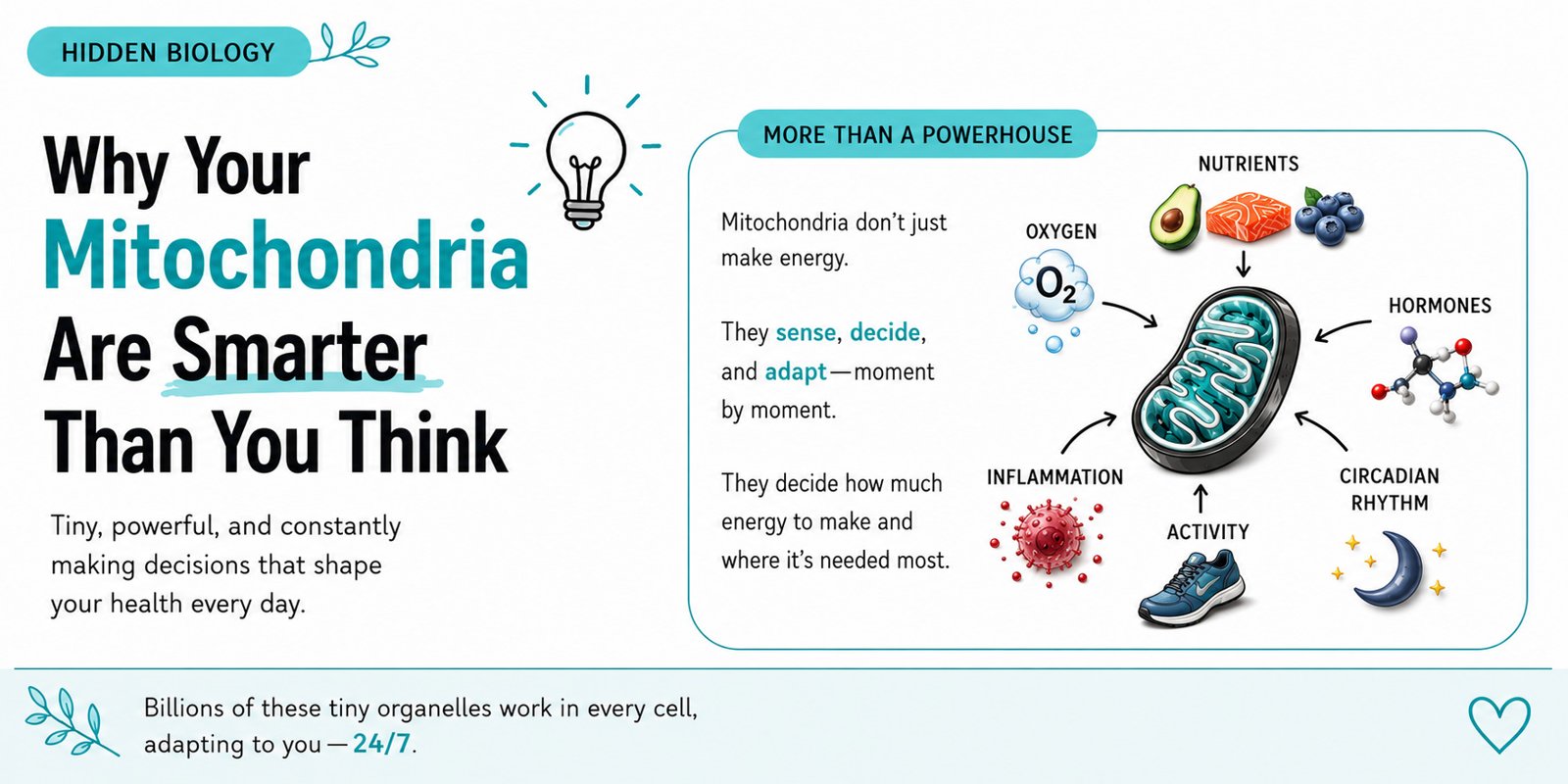
Every cell in our body contains hundreds or thousands of tiny structures called mitochondria. This varies according to cell type, but on average there are between 10 trillion and 100 trillion mitochondria in the human body. These fascinating structures are the engine rooms that turn food and oxygen into usable energy in the form of ATP (adenosine triphosphate), the primary energy currency of all living cells.
A healthy person at rest produces their body weight in ATP every day. At maximal exercise, this number can increase to as much as 1kg per minute! Let those numbers sink in for a moment.
Even more intriguing, whilst having been appropriately taught the biological function of mitochondria, in clinical practice, I thought of mitochondria only as a catastrophe: rare, devastating, inherited diseases with grim names and grimmer prognoses. I never dwelled on the ordinary competence of mitochondria — how many we have, how efficiently they burn fuel, how well our body clears out the damaged ones. They sit near the very centre of how we age, and how much of that is not fixed at all.
Structured exercise, it turns out, switches on a genetic program (researchers call its master regulator PGC-1α) that builds fresh mitochondria and clears away the worn ones. This has been measured again and again, in young bodies and old ones alike. Movement, in other words, is not a vague moral good, the sort of thing we tell patients as we usher them out the door. It is one of the most direct instruments we possess for renewing the energy-producing machinery inside your own cells. It is a piece of leverage available to a person at seventy as much as at seventeen. I find it absolutely fascinating that the engine room can be rebuilt, deliberately, by the person who houses it.
The Conversation We Never Knew We Were Having
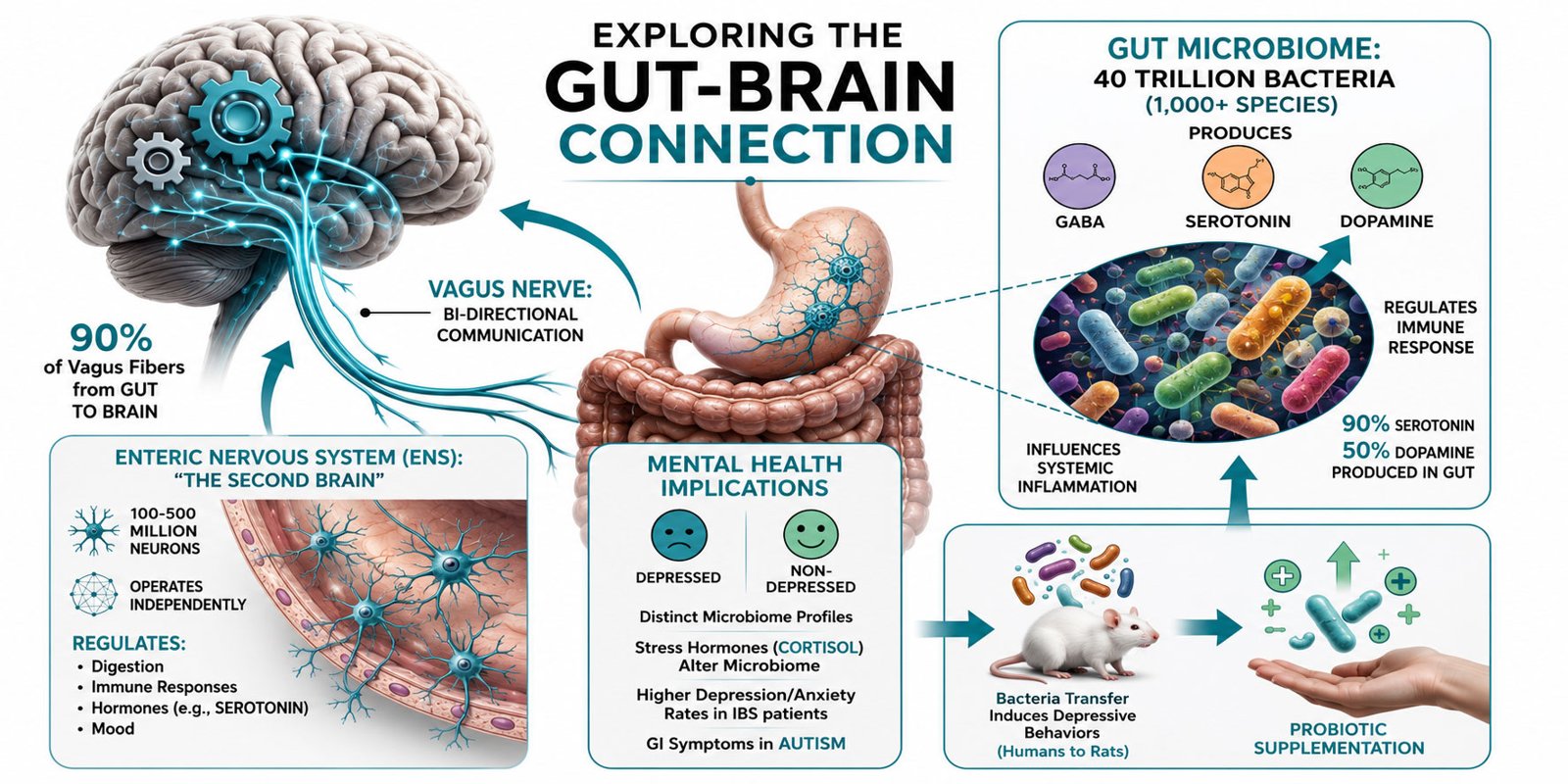
The second thing I never properly appreciated, is how much the trillions of bacteria in our gut are in continuous conversation with our brain. When those bacteria ferment the fibre we eat, they produce compounds called short-chain fatty acids (SCFAs), and these do not stay politely in the gut. They enter the bloodstream, calm inflammation throughout the body, and speak directly to the brain via the Vagus nerve, the great two-way cable running between gut and skull. It is older, by far, than language itself. Some gut bacteria even manufacture the very chemical messengers our brain uses to talk to itself.
This is why a troubled gut so often travels in the company of a troubled mind. Not because one causes the other in some simple, one-directional sense, but because they were never separate to begin with. We spent a century treating psychiatry and gastroenterology as distant countries with no shared border. Emerson wrote that the currents of the universal being circulate through us. He could not have known how literally this would one day be demonstrated in vagal tone and fermented fibre, but I suspect he would have recognised the shape of the idea at once. We are not sealed vessels. We are permeable, relational, endlessly exchanging with what surrounds and inhabits us. And increasingly, it seems, governed by tenants we never knew we were hosting.
Stress Honestly Reconsidered
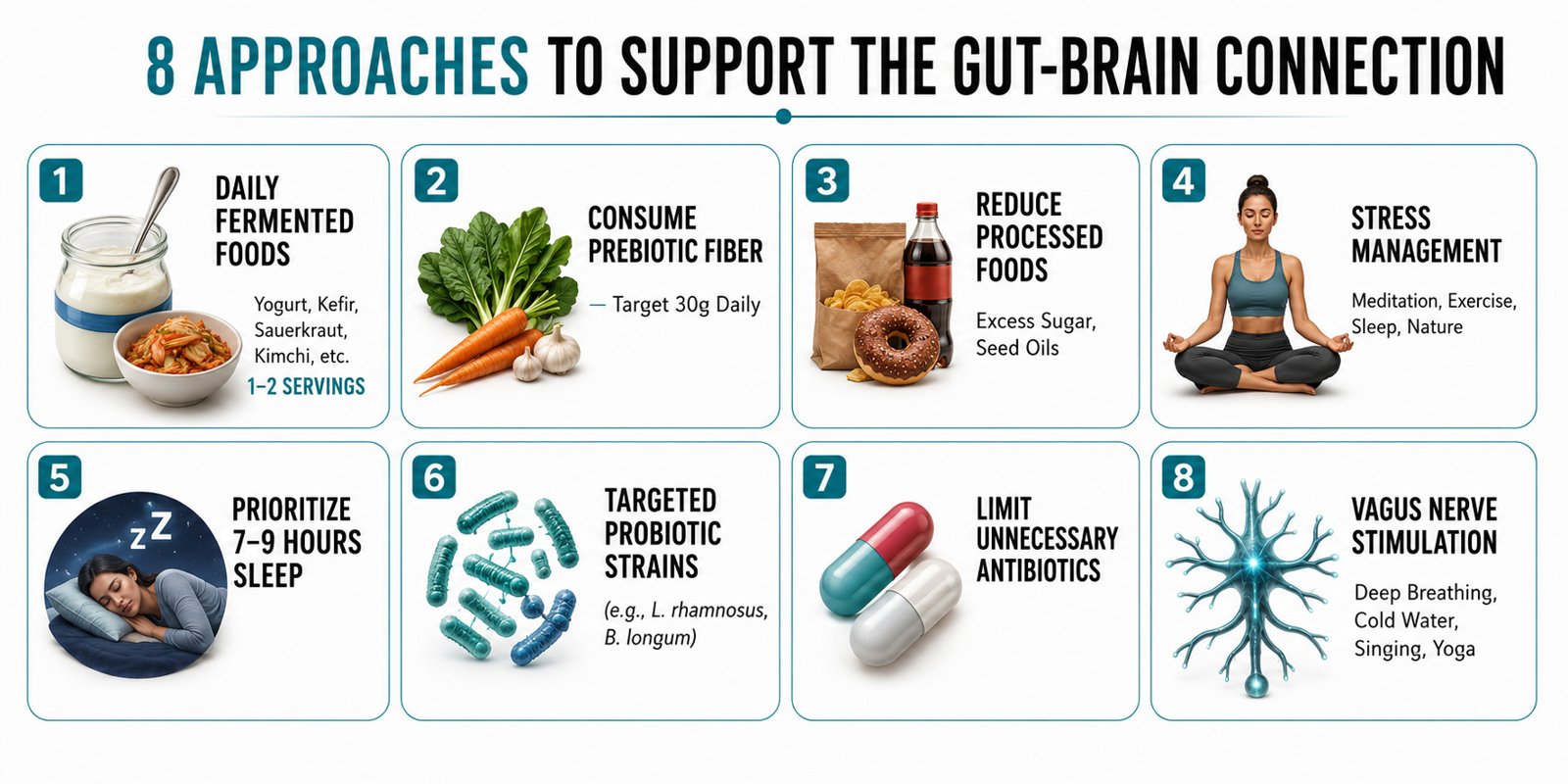
We were taught stress as a soft subject, the province of the psychiatrist, filed apart from “real” disease. I no longer believe that separation holds. Chronic stress keeps cortisol elevated for far longer than the hormone was ever designed to remain, and sustained high cortisol feeds the same slow, low-grade inflammation that drives the coronary disease I spent my career operating on. And because the gut and the stress system are in constant dialogue, poor sleep and unmanaged pressure can quietly reshape the microbial population inside us, while a struggling gut can make us more brittle under stress in turn. It is a loop, which is, I think, the most hopeful word in this entire essay, because a loop can be entered and turned in either direction, at any point along its circumference.
Yuval Noah Harari has argued that Homo sapiens is, above all, the animal that organises itself around stories. That we do not merely tell stories, we live inside them, and the stories we inherit shape what we imagine is possible for a body to become. I have come to think that modern medicine inherited a story about the body as a machine to be repaired rather than an ecosystem to be tended, and that this story, however useful in the operating theatre, quietly foreclosed an entire vocabulary of prevention. Perhaps the most important thing this new science offers us is not a new drug or a new device, but a new story. One in which the body is understood, correctly, as continuous with what it eats, how it moves, how it rests, and how it is stressed, long before any of that ever reaches a surgeon’s hands.
What I Owe to Honesty
I do not want to romanticise a field that is, in truth, still young and unevenly proven. Much of what excites me here is well demonstrated; a good deal of the broader “longevity” industry has run ahead of its evidence, selling supplements and biomarker panels on plausibility rather than results. I have spent too long inside the discipline of evidence-based medicine to abandon its rigour simply because I find the underlying philosophy compelling. Feynman’s warning applies here too, in the other direction: it would be its own kind of self-deception to mistake enthusiasm for proof.
But I have also spent too long at the end of the story, doing extraordinary things to bodies that had been failing quietly for decades before I ever met them, to dismiss the growing evidence that the story could, in many cases, have been rewritten far earlier, and far more gently, than by a surgeon’s hand.
A Closing Reflection
This is the reckoning arthritis has forced on me, and I no longer experience it as loss. I have simply been asked to change my instrument. For thirty years I held a scalpel. Now, I find, I want to hold a pen and to spend whatever years remain to me not treating the sick, which I did as well as I knew how, but helping the well stay well, which I never properly learned and which I am only now, as a grateful outsider, beginning to respect and appreciate properly.
Isaac Asimov has observed that the most exciting phrase in science is not “Eureka!” but “That’s funny…” The quiet, curious noticing that precedes discovery. I feel that noticing in myself now, at an age when I expected only to be consolidating what I already knew. The Socratic paradox holds that by acknowledging the limits of our understanding, we open ourselves up to genuine learning and curiosity. It turns out there is an entire, largely unexplored continent lying just beyond the disease model I thought I had mastered and I am inspired and enthused to spend my time exploring it.
And to invite others along for the ride.